
Fintech legal compliance differs from many other sectors in one respect: most of the risk lies not in the licence but in the flow of data and money. An app that merely collects ID photos, faces and transaction histories is already subject to the Law on Personal Data Protection, the Law on Data, banks' electronic customer identification rules and anti-money laundering rules.
In 2026 this pressure grew as Decree No. 363/2026/ND-CP on administrative sanctions in the data sector took effect on 11/11/2026. This article summarises the operational points a fintech company needs to control, especially when partnering with banks.
Define the model before discussing fintech legal compliance
The first question is what service the business provides. Intermediary payment services such as e-wallets and payment gateways require a State Bank licence under Decree No. 52/2024/ND-CP on cashless payments. Lending falls within the scope of credit institutions under the Law on Credit Institutions No. 32/2024/QH15. Many fintechs are in substance technology providers to banks: building apps, credit scoring, data connectivity, while the financial product is provided by the bank.
For certain new solutions, Decree No. 94/2025/ND-CP has allowed a controlled sandbox in the banking sector since 01/7/2025, covering credit scoring, data sharing via open application programming interfaces (Open API) and peer-to-peer lending, with a maximum testing period of 2 years. Participation requires a dossier, a customer protection plan and a separate reporting mechanism. Misidentifying the model is the biggest risk, because the business may be carrying out a licensed activity without knowing it.
Electronic customer identification (eKYC), who is responsible
When a fintech partners with a bank to open accounts or wallets for customers, the identification duty under State Bank rules lies with the account-opening institution. Circular No. 17/2024/TT-NHNN on opening and using payment accounts allows electronic account opening, requiring the customer's biometric data to be matched against the chip-based ID card or through the electronic identification and authentication system.
The fintech usually handles the interface and data collection. The partnership agreement must therefore answer clearly: on whose infrastructure biometric data is collected, where and for how long it is stored and who may access it; and how identification evidence (photos, videos, matching results, logs) is kept and provided to the bank during inspections. A fintech should not keep copies of biometric data without a clear legal basis and need.
Personal data and digital data, duties that cannot be outsourced
The Law on Personal Data Protection No. 91/2025/QH15, effective from 01/01/2026, requires businesses to identify the legal basis for processing, obtain consent properly, prepare impact assessments and apply appropriate protection measures, especially for sensitive data such as biometric, financial and credit data. The Law on Data No. 60/2024/QH15 adds duties on data management and quality.
Under Clause 1, Article 8 of Decree No. 363/2026/ND-CP, individuals are fined VND 20–40 million for collecting or creating data without consent as required, failing to issue a collection procedure or apply data protection measures, or failing to check data accuracy and quality. The fine rises to VND 40–60 million for collecting beyond the notified scope or purpose, deliberately creating false data, or violations that expose sensitive information (Clause 2, Article 8 of Decree No. 363/2026/ND-CP)[7]. Organisations are fined double the amount for individuals and may be forced to delete or destroy data or surrender illegal gains. The decree does not apply to acts already covered by the decree on sanctions for cybersecurity and personal data protection.
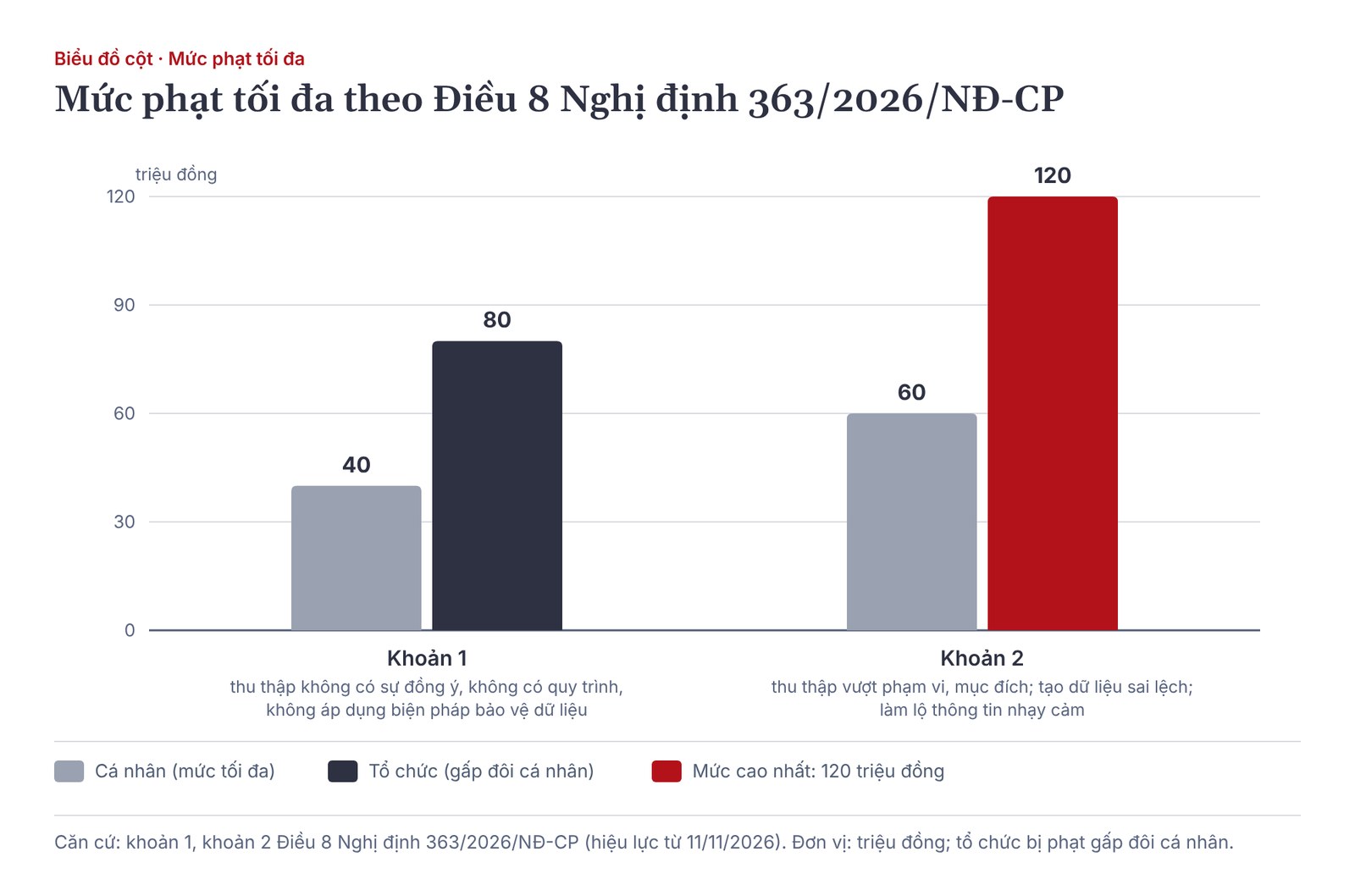
Figure 01. Maximum fines under Article 8, Decree 363/2026/ND-CP
Basis: Clauses 1 and 2, Article 8, Decree 363/2026/ND-CP
Each pair compares the maximum fine for individuals (grey) and organisations (double) per clause, in VND million. The red bar is the highest level, VND 120 million for organisations under clause 2.
For fintechs, "collecting beyond the notified scope" is a real risk: an app requests access to contacts, location or messages for credit scoring while the privacy policy does not state this purpose. Every app permission should be checked against the notified purpose.
Partnering with banks, allocating roles in the agreement
Banks are closely supervised on outsourcing, system security and customer protection, so they pass many requirements on to fintechs by contract. Fintechs should prepare a compliance pack proactively rather than wait for the bank's checklist.
| Area | What to agree | Party usually primarily responsible | Evidence |
|---|---|---|---|
| Customer identification | eKYC flow, biometric matching, evidence retention | Bank | eKYC procedure, matching logs |
| Personal data | Controller and processor roles; consent; retention period | Both parties by role | Impact assessment, privacy policy |
| Information security | Security standards, testing, incident handling | Fintech for its own systems | Test reports, incident response plan |
| Anti-money laundering | Transaction monitoring, sharing alerts | Bank, with fintech providing data | Internal rules, alert reports |
| Customer complaints | Intake channels, handling time, escalation | Customer-facing party | Complaint log |
| Audit, termination | Inspection rights, data hand-over on termination | Both parties | Contract clauses, hand-over minutes |
Implementation procedure and internal controls
A fintech–bank partnership project should follow the six steps below, with legal involved from the first step rather than only at contract signing.
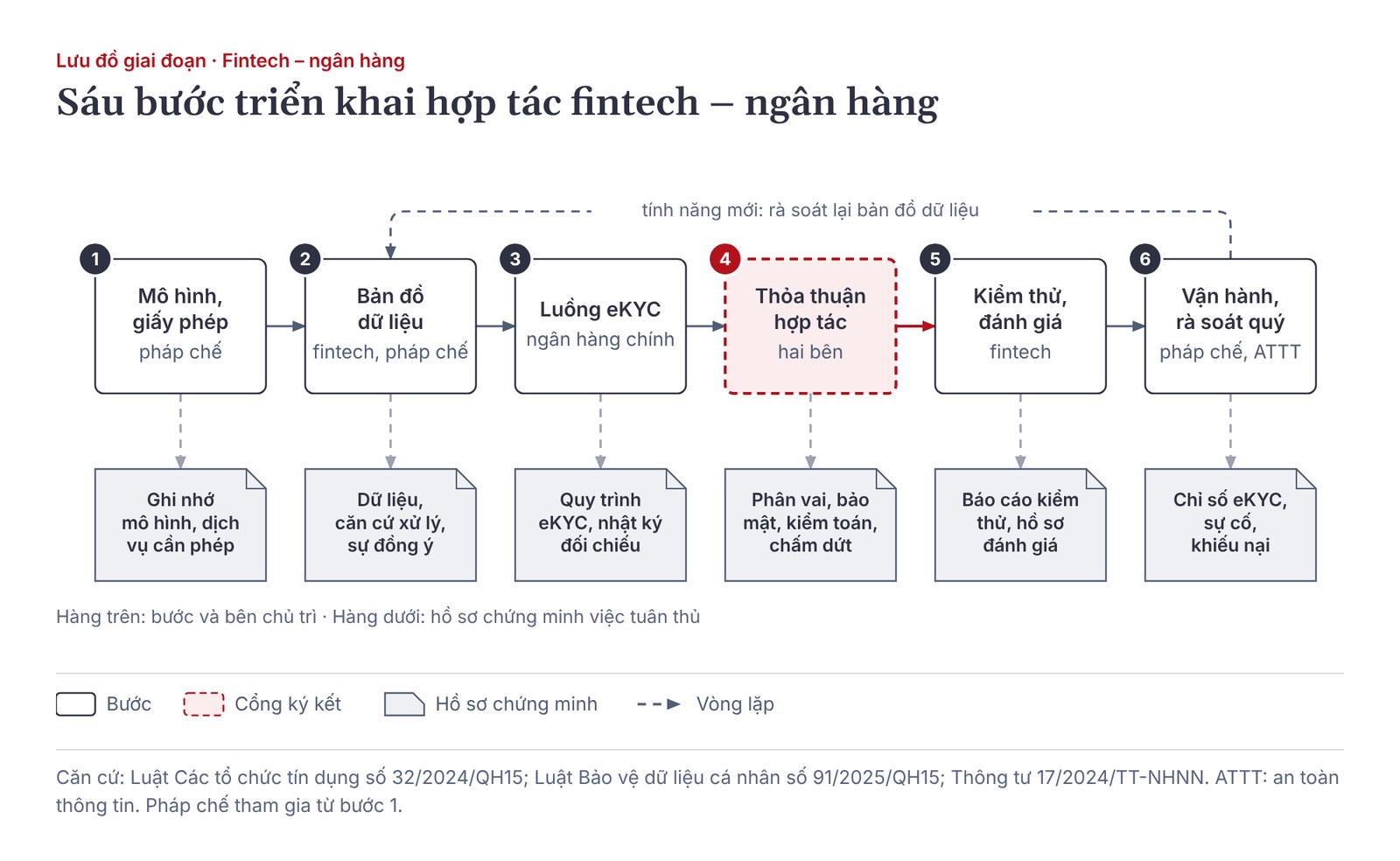
Figure 02. Six steps to launch a fintech – bank partnership
Basis: Law on Credit Institutions No. 32/2024/QH15; Personal Data Protection Law No. 91/2025/QH15; Circular 17/2024/TT-NHNN
The top row shows each step and its lead party; the bottom row shows the compliance evidence for that step. The red dashed box is the signing gate; the dashed arrow means every new feature sends you back to the data map.
Once live, the business needs a set of indicators monitored regularly: eKYC rejection rate, number of consent withdrawal requests and handling time, security incidents and customer complaints. Each quarter, legal and information security should review the data map whenever new features are added, as each new feature usually brings a new data flow.
Fintechs should also note managers' responsibility. When a data leak occurs, regulators and partner banks will ask whether the business had procedures, carried out impact assessments and trained staff. Compliance records are the business's own protection.
Legal basis and sources
- Law on Credit Institutions No. 32/2024/QH15.
- Law on Data No. 60/2024/QH15.
- Law on Personal Data Protection No. 91/2025/QH15, effective from 01/01/2026.
- Law on Anti-Money Laundering No. 14/2022/QH15 (as amended and supplemented).
- Decree No. 52/2024/ND-CP on cashless payments.
- Decree No. 94/2025/ND-CP on the controlled testing mechanism in the banking sector, effective from 01/7/2025.
- Decree No. 363/2026/ND-CP on administrative sanctions in the data sector, issued on 19/9/2026, effective from 11/11/2026.
- Circular No. 17/2024/TT-NHNN on opening and using payment accounts at payment service providers.
How Justeps supports businesses
- Finance and banking advisory: defining the model, licences and sandbox application files.
- Advisory and regulatory compliance: data maps, privacy policies, impact assessments.
- Reviewing and negotiating partnership agreements with banks and technology outsourcing contracts.
- Governance standardisation: internal rules on anti-money laundering, incident handling and complaints.
- In-house training on data protection for product and engineering teams.
Contact Justeps for advice on your specific situation.
Frequently asked questions
May a fintech carry out eKYC itself to open bank accounts?
Identification when opening payment accounts is the duty of the account-opening institution. A fintech may provide technology and interfaces, but the identification procedure and evidence must meet the bank's requirements under State Bank rules.
Which solutions does the sandbox under Decree No. 94/2025/ND-CP cover?
Credit scoring, data sharing via Open API and peer-to-peer lending, with a maximum testing period of 2 years.
What is the fine for collecting data beyond the notified purpose?
Under Clause 2, Article 8 of Decree No. 363/2026/ND-CP, individuals are fined VND 40–60 million; organisations are fined double, up to VND 120 million.
Is a fintech a data controller or processor?
It depends on the model. If the fintech decides the purpose and means of processing customer data, it is a controller. If it only processes on the bank's instructions, it is a processor. The role should be stated in the agreement.
How often should the data map be reviewed?
Whenever a new feature is launched and at least quarterly, as each new feature usually brings a new data flow.
Related articles
- Labor dispute mediation in the workplace: the internal procedure before going to a labor mediator
- Occupational safety and health system for factories: organisation, training and monitoring
- Real estate brokerage services in Vietnam: conditions, brokerage contracts and broker control
This article is for reference and reflects the regulations in force at the time of publication. Please consult Justeps for advice tailored to your company’s records and situation.
For further information, please contact:
📩 Email: info@justeps.vn
🌐 Website: https://justepslegal.com · https://justeps.vn
🌐 Page: Justeps
☎️ Hotline (Zalo): 096 172 2607
📍 Thanh Xuan Office: 12th Floor, Licogi 13 Tower, 164 Khuat Duy Tien Street, Thanh Xuan Ward, Hanoi, Vietnam
📍 Ha Dong Office: LK06B, No.10, Dong Dua Area, Ha Dong Ward, Hanoi, Vietnam
📍 Ho Chi Minh City Branch: 528 Le Van Sy, Ho Chi Minh City, Vietnam
📍 Hai Phong Office: Truong Thinh Village, Ha Dong Commune, Hai Phong, Vietnam
📍 Quang Ninh Office: Van Don Special Zone, Quang Ninh Province, Vietnam





