Many companies start thinking about IPO preparation once they have chosen an underwriter and set a target to list the following year. In practice, the most time-consuming work is not the offering file but the things that need a track record: several consecutive years of audited financial statements, complete governance records, and related-party transactions approved by proper procedure. None of these can be made up in a few months.
That is why a realistic window for IPO preparation is 2 to 3 years before the planned listing date. This article breaks the roadmap into specific milestones, shows which department does what, and highlights what investors and the State Securities Commission look at closely.
IPO preparation starts with a readiness assessment
The first step is a full review comparing the current state against the conditions for an initial public offering of shares under the Law on Securities No. 54/2019/QH14 (as amended by Law No. 56/2024/QH15)[1] and Decree No. 155/2020/ND-CP (as amended by Decree No. 245/2025/ND-CP)[2]. The condition groups cover paid-up charter capital, profitable results in the preceding years with no accumulated losses, a minimum share of stock sold to investors who are not major shareholders, lock-up commitments by major shareholders, an advisory firm, and a commitment to list after the offering. The exact thresholds should be checked against the consolidated text at the time of filing, as the securities framework was amended frequently in 2024–2025.
The output is a gap list, with an owner and deadline for each gap. For family businesses or groups with many companies, the biggest gap is usually the ownership structure: assets held by individuals, sister companies trading with each other, shared costs without contracts.
A 36-month roadmap to listing
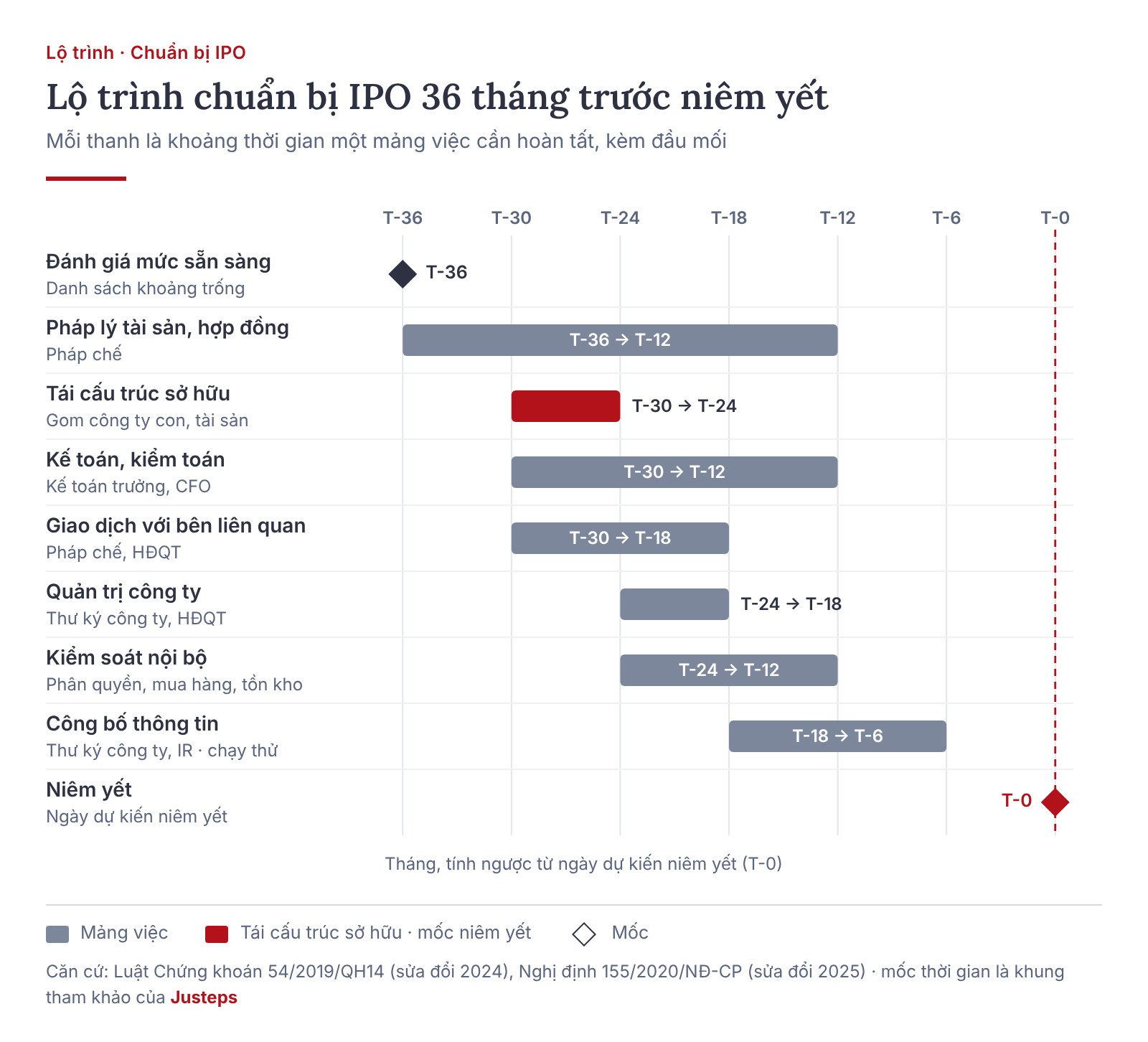
Figure 01. 36-month IPO preparation roadmap
Basis: Securities Law 54/2019/QH14 (amended 2024), Decree 155/2020/ND-CP | Indicative timing
Each bar is the window for one workstream, counted back from listing day T-0; the red bar is ownership restructuring, which must finish first.
T-30 to T-24 is for restructuring ownership. If the company plans to IPO at parent level, subsidiaries and related assets should be brought in before the run of financial years that will be audited for the offering file. Late restructuring makes the years incomparable, and that is the first question institutional investors ask.
Standardising accounting and audit
From 2026, companies apply the accounting regime under Circular No. 99/2025/TT-BTC. During IPO preparation, accounting should unify policies on revenue recognition, provisions and depreciation across units, prepare consolidated statements where there are subsidiaries, and move as early as possible to an audit firm approved to audit public-interest entities. Changing auditors just before the IPO often leads to retrospective restatements that undermine investor confidence. Companies targeting foreign investors should consider also preparing IFRS statements under the Ministry of Finance's voluntary roadmap.
Governance to public-company standard
A joint-stock company may choose a model with a Supervisory Board or a Board of Directors with an Audit Committee under Article 137 of the Law on Enterprises No. 59/2020/QH14. Whichever model is chosen, the company should add independent Board members, issue internal corporate governance rules and Board operating rules, and run them for at least a year before the IPO so that real minutes and resolutions show the structure works.
Task table by workstream
| Workstream | Tasks | Lead | Timing |
|---|---|---|---|
| Corporate governance | Add independent Board members, choose the Supervisory Board or Audit Committee model, issue internal governance rules | Company secretary, Board | T-24 to T-18 |
| Accounting, audit | Unify accounting policies across the group, prepare consolidated statements, audit by an approved firm | Chief accountant, CFO | T-30 to T-12 |
| Internal control | Authority matrix, procurement, payment, cash and inventory procedures | Internal control | T-24 to T-12 |
| Related-party transactions | List related persons, review contracts, standardise approval procedures | Legal, Board | T-30 to T-18 |
| Information disclosure | Disclosure rules, authorised discloser, periodic reporting calendar, ad hoc procedure | Company secretary, IR | T-18 to T-6 |
| Legal title to assets, contracts | Land files, licences, intellectual property, major contracts, disputes | Legal | T-36 to T-12 |
One area often underestimated is related-party transactions. Once public, contracts with major shareholders, managers and their related persons must be approved by the Board or the General Meeting according to authority, and disclosed. The company should rehearse this procedure during preparation and phase out unnecessary transactions.
Information disclosure, practise before it is mandatory
After becoming a public company, the business must make periodic, ad hoc and on-request disclosures on the systems of the State Securities Commission and the stock exchange. The usual risk is not deliberate concealment but late disclosure because nobody knows which events must be disclosed and how fast. A practical approach is to issue disclosure rules, appoint an authorised discloser, map ad hoc events to departments (changes of key personnel, major contracts, lawsuits, penalty decisions) and run the system for 6–12 months before the IPO.
Shareholding structure and dilution
Founders need to see their post-IPO ownership in advance to decide on the issuance structure and control. The example below assumes the company issues new shares equal to 25% of existing shares.
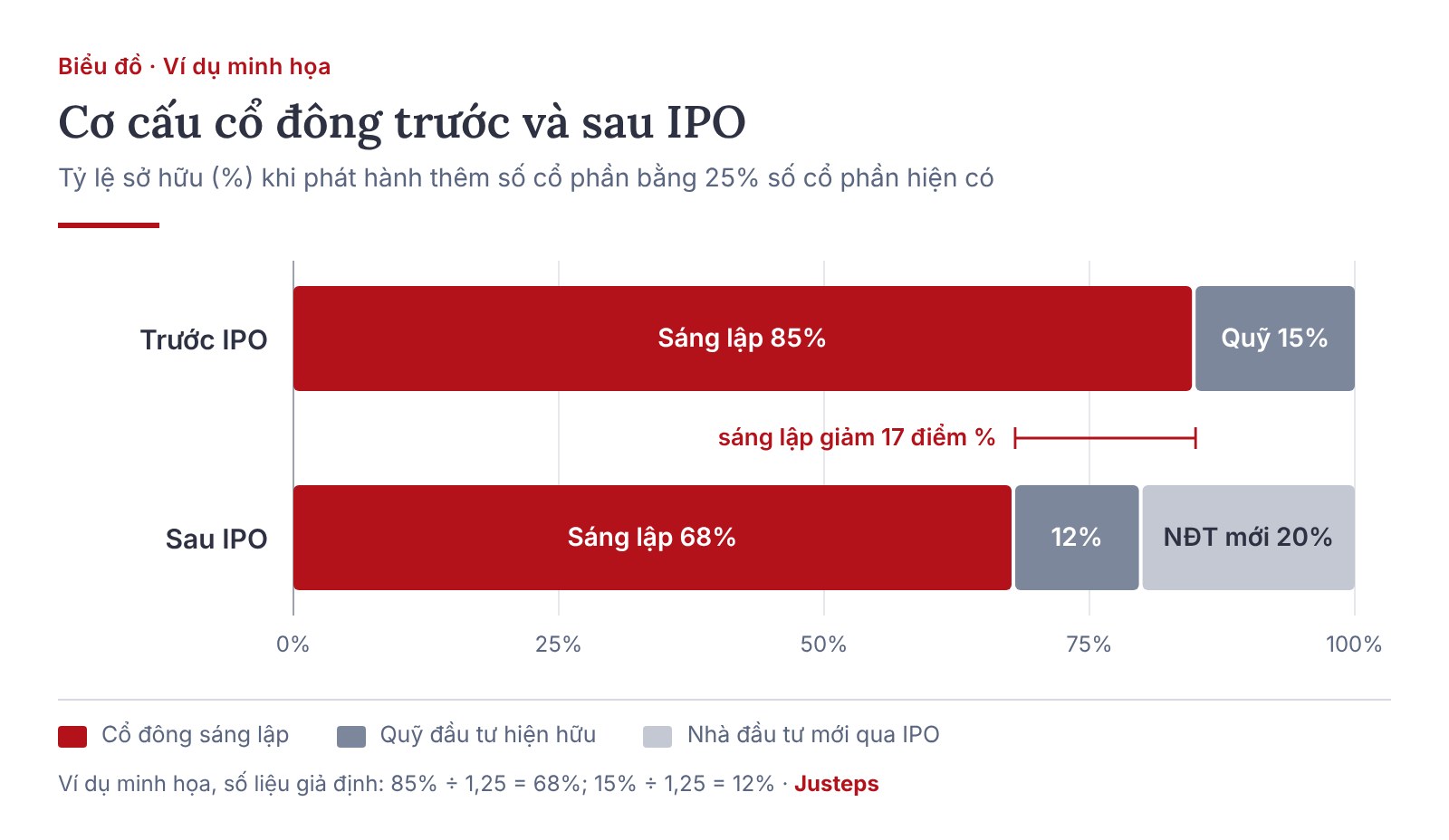
Figure 02. Shareholding before and after the IPO
Illustrative example, assumed figures
The two bars compare ownership before and after issuing 25% new shares; the red bracket shows the founders' 17-point dilution.
At 68%, the founders can still pass most General Meeting resolutions. But if there are plans for further issuances after listing or an employee share programme, this stake may drop below key voting thresholds in the charter. This is the time to review the charter and shareholders' agreement and remove special rights unsuitable for a listed company.
Legal basis and sources
- Law on Securities No. 54/2019/QH14, as amended by Law No. 56/2024/QH15.
- Decree No. 155/2020/ND-CP detailing the Law on Securities, as amended by Decree No. 245/2025/ND-CP.
- Law on Enterprises No. 59/2020/QH14 (Article 137 on the management structure of joint-stock companies), as amended by Law No. 76/2025/QH15.
- Law on Accounting No. 88/2015/QH13; Circular No. 99/2025/TT-BTC guiding the enterprise accounting regime.
- Law on Independent Audit No. 67/2011/QH12.
How Justeps supports businesses
- IPO readiness assessment and a gap remediation roadmap (Capital markets).
- Restructuring ownership and consolidating companies and assets before the IPO (Strategic restructuring).
- Drafting corporate governance rules, Board rules and disclosure rules (Governance standardisation).
- Reviewing related-party transactions and approval procedures (Advisory and regulatory compliance).
- Legal due diligence for the prospectus (Corporate, M&A).
Contact Justeps to discuss an IPO preparation roadmap for your company.
Frequently asked questions
Can a limited liability company IPO?
Not directly. It must first convert into a joint-stock company, and should do so early to build an operating history and financial statements as a joint-stock company.
Must we become a public company before the IPO?
It is not a mandatory step, but many companies register as a public company first to get used to disclosure and governance obligations before offering shares.
How many years of audited financial statements are enough?
The offering file requires audited statements for the preceding years as prescribed. In practice, institutional investors want at least 3 years of consistent figures, so standardise early.
What does IPO preparation cost?
Typically underwriter advisory fees, audit, legal advice, restructuring costs (taxes, transfer fees), and the cost of adding governance staff and accounting systems.
After the IPO, what is most often breached?
Late or incomplete disclosure, related-party transactions not approved by the proper body, and insiders trading shares without reporting.
Related articles
- Legal due diligence when acquiring a company: document checklist and common red flags
- Merging two subsidiaries within a group: HR, contracts, tax and invoices roadmap
- Periodic corporate legal review: 12 areas to check every year
This article is for reference and reflects the regulations in force at the time of publication. Please consult Justeps for advice tailored to your company’s records and situation.
For further information, please contact:
📩 Email: info@justeps.vn
🌐 Website: https://justepslegal.com · https://justeps.vn
🌐 Page: Justeps
☎️ Hotline (Zalo): 096 172 2607
📍 Thanh Xuan Office: 12th Floor, Licogi 13 Tower, 164 Khuat Duy Tien Street, Thanh Xuan Ward, Hanoi, Vietnam
📍 Ha Dong Office: LK06B, No.10, Dong Dua Area, Ha Dong Ward, Hanoi, Vietnam
📍 Ho Chi Minh City Branch: 528 Le Van Sy, Ho Chi Minh City, Vietnam
📍 Hai Phong Office: Truong Thinh Village, Ha Dong Commune, Hai Phong, Vietnam
📍 Quang Ninh Office: Van Don Special Zone, Quang Ninh Province, Vietnam