When a company runs into trouble, the first question from authorities, shareholders or counterparties rarely stops at what the company must bear. It is who signed, who voted and who knew but did not stop it. The liability of company managers is therefore far from theoretical, especially for a Director acting as legal representative, Board members and the chief accountant.
This article does not analyse individual offences or penalties. It focuses on the operational question: what each position is responsible for, which situations most often lead to personal liability, and how the company should organise records and processes so that managers act correctly and can prove they did.
Who counts as a company manager
Company managers include the Chairperson and members of the Members’ Council, the company President, the Chairperson and members of the Board of Directors, the Director or General Director, and individuals holding other managerial titles under the company charter (under clause 24, Article 4 of the Law on Enterprises No. 59/2020/QH14, as amended in 2025)[1]. The chief accountant is a manager within the meaning of the Law on Enterprises only if the charter says so, but either way the position carries its own duties under the Law on Accounting No. 88/2015/QH13.
The first control is to reread the charter and identify exactly which positions are managers. This list determines who must disclose related interests, who is subject to related-party transaction controls and who can be sued by shareholders.
Liability of company managers under the Law on Enterprises
In a joint stock company, Board members, the Director or General Director and other managers must exercise their rights and duties honestly, prudently and in the best way to protect the company’s lawful interests; be loyal to the interests of the company and its shareholders; and not abuse their position, information, business opportunities or company assets for personal gain (under Article 165 of the Law on Enterprises). A manager who breaches these duties and causes loss is personally or jointly liable to compensate and must return any benefit received.
Managers must also disclose companies that they and their related persons own or hold capital or shares in (under Article 164). A shareholder or group holding at least 1% of ordinary shares may sue, in its own name or on behalf of the company, to hold Board members, the Director or General Director personally or jointly liable (under Article 166). Limited liability companies have a similar mechanism allowing members to sue managers.
The legal representative bears additional duties under Article 13 of the Law on Enterprises: honesty, prudence, loyalty to the company, timely disclosure of related persons, and personal liability for loss caused by breaching these duties. This is why many hired Directors ask for the charter to divide the scope of representation clearly when the company has several legal representatives.
| Position | Core duties | Common liability risks |
|---|---|---|
| Director or General Director (usually the legal representative) | Runs daily business in line with the charter and resolutions; honest, prudent; no self-dealing | Compensating the company; exit suspension when the company owes tax; criminal liability if an offence is committed |
| Chairperson and Board members | Vote, supervise the General Director; disclose related interests | Joint liability when approving resolutions that breach the law or charter and cause loss |
| Chief accountant | Organises accounting, prepares and signs financial statements in line with standards | Administrative penalties in accounting; criminal liability for violations with serious consequences |
| Other managers under the charter | Perform the assigned scope, report honestly | Liability under the employment contract, regulations and civil law |
The chief accountant, separate duties under accounting law
The chief accountant organises the accounting function, checks vouchers, bookkeeping and financial statements, and co-signs the financial statements with the legal representative. Breaches concerning vouchers, books and reports are subject to administrative penalties under the decree on sanctions in accounting. Where an accounting violation causes serious consequences, the individual may face criminal liability under Article 221 of the Criminal Code 2015 (as amended).
The real risk lies in a chief accountant signing on verbal instructions, or recording expenses without supporting documents. Companies should allow the chief accountant to record objections in writing when disagreeing with a payment and keep that note with the payment file.
Situations that commonly lead to personal liability
- The company has overdue tax and the legal representative is barred from leaving the country under tax administration and exit and entry law.
- Social insurance contributions are deducted from employees but not paid; large-scale evasion may be prosecuted under Article 216 of the Criminal Code.
- A Board member approves a transaction with a relative’s company without disclosure and without the approval procedure under Article 167 of the Law on Enterprises.
- The Director signs a guarantee or loan beyond authority, the company loses money and shareholders sue.
- A manager keeps the title despite falling into a category barred from managing companies under clause 2, Article 17 of the Law on Enterprises.
A process for controlling personal liability
The best protection for managers is helping them make decisions that are well founded and documented. The six actions below should be built into governance regulations and tracked by the company secretary or legal team.
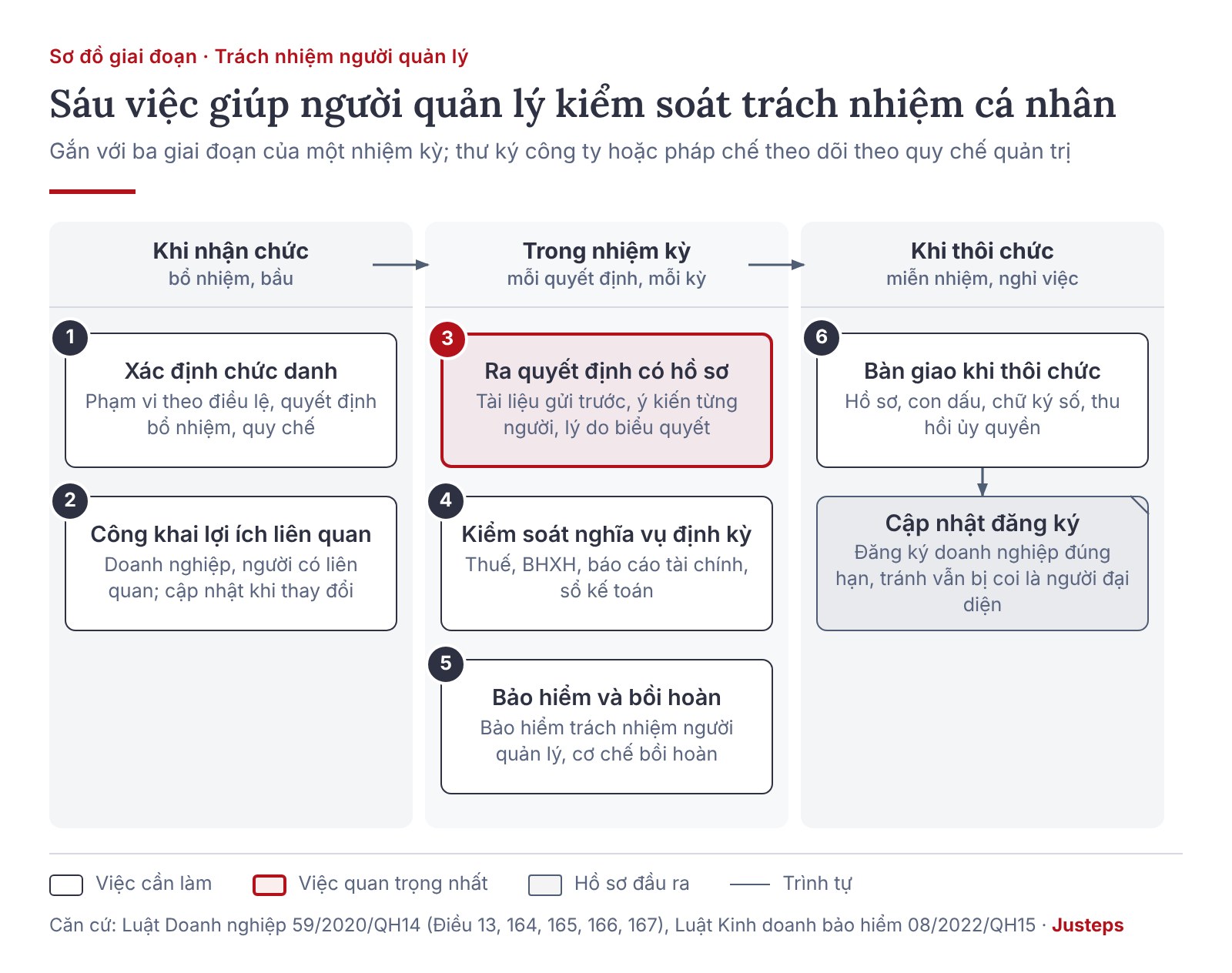
Figure 01. Six practices to manage a manager's personal liability
Basis: Enterprise Law 59/2020/QH14 (Arts. 13, 164–167), Insurance Business Law 08/2022/QH15
Practices are grouped by the three stages of a term; the red box is the most important one: documented decisions.
Of these, documented decision-making matters most. Board minutes should record which materials were sent in advance, each member’s view and the reasons for votes, especially dissenting ones. A member who disagrees should ask for the objection to be minuted, as this is the basis for excluding joint liability later.
Companies may buy directors’ and officers’ liability insurance under the Law on Insurance Business No. 08/2022/QH15 and provide for reimbursement of reasonable costs for managers sued for acting in good faith. Insurance does not replace compliance, but it helps retain capable managers, especially independent Board members.
When a manager steps down, the company should prepare a handover record for files, seals and digital signatures, revoke powers of attorney and update the enterprise registration on time so that a departed person is not still treated as the legal representative. Companies that need to standardise these regulations can refer to Justeps’ corporate governance services.
Legal basis and sources
- Law on Enterprises No. 59/2020/QH14, as amended in 2025 (clause 24, Article 4; Article 13; clause 2, Article 17; Articles 164, 165, 166 and 167).
- Law on Accounting No. 88/2015/QH13 and guiding documents on chief accountants.
- Criminal Code No. 100/2015/QH13, as amended (Articles 216 and 221).
- Law on Insurance Business No. 08/2022/QH15.
- Tax administration law and law on exit and entry of Vietnamese citizens regarding exit suspension.
How Justeps supports businesses
- Reviewing the charter and appointment decisions to define each position’s scope of liability through corporate governance.
- Building regulations on disclosure of related interests and related-party transaction controls through regulatory advice and compliance.
- Standardising templates for Board and Members’ Council minutes and resolutions and handover records through governance standardisation.
- Training Boards, executives and chief accountants on manager liability through in-house training.
- Ongoing legal advice when disputes or claims against managers arise. Learn more at Justeps.
Frequently asked questions
Are non-executive Board members liable?
Yes. The duties of honesty, prudence and loyalty under Article 165 of the Law on Enterprises apply to all Board members, including non-executive and independent members.
Does objecting at a meeting protect a Board member from joint liability?
A minuted objection is important evidence that the member did not approve the decision that caused loss. Members should therefore ask for it to be recorded clearly and sign the minutes.
Can a chief accountant be penalised for following the Director’s instructions?
Following instructions does not automatically exclude the chief accountant’s liability. The chief accountant should object in writing to unlawful instructions and keep that objection on file.
Am I still liable after resigning if the enterprise registration has not been updated?
On the registration record, the person may still be treated as legal representative until the change is registered. Ask the company to file the change as soon as you leave office.
Does D&O insurance cover fines?
Coverage depends on the policy. Insurance usually does not cover intentional violations of law, so companies should read the exclusions carefully before buying.
Related articles
- General Director authority: delegation and limits in the charter and internal regulations
- Legal and communications crisis management: a 72-hour playbook for companies
- Family business succession to the next generation: family charter and a five-year roadmap
This article is for reference and reflects the regulations in force at the time of publication. Please consult Justeps for advice tailored to your company’s records and situation.
For further information, please contact:
📩 Email: info@justeps.vn
🌐 Website: https://justepslegal.com · https://justeps.vn
🌐 Page: Justeps
☎️ Hotline (Zalo): 096 172 2607
📍 Thanh Xuan Office: 12th Floor, Licogi 13 Tower, 164 Khuat Duy Tien Street, Thanh Xuan Ward, Hanoi, Vietnam
📍 Ha Dong Office: LK06B, No.10, Dong Dua Area, Ha Dong Ward, Hanoi, Vietnam
📍 Ho Chi Minh City Branch: 528 Le Van Sy, Ho Chi Minh City, Vietnam
📍 Hai Phong Office: Truong Thinh Village, Ha Dong Commune, Hai Phong, Vietnam
📍 Quang Ninh Office: Van Don Special Zone, Quang Ninh Province, Vietnam