
Corporate restructuring usually starts with a business question: which line should be spun off to raise capital, which companies should be merged to cut costs, who will hold ownership when the next generation takes over. Tax is not the main reason, but it decides whether an option really pays off, and it is where companies are most exposed to tax reassessment if the design is wrong.
2026–2027 brings many changes to corporate income tax, including anti-abuse conditions aimed squarely at divisions, separations and mergers. This article sets out common restructuring options, the tax points to check and a risk-control process.
What lawful tax optimisation in corporate restructuring means
Lawful tax optimisation means choosing the structure, timing and execution of transactions so that the company pays no more than the law requires while properly benefiting from incentives it qualifies for. The line is drawn where the structure must have a genuine business purpose, supporting documents and must not fall into cases the law has excluded.
An option that only makes sense for tax and changes nothing about operations is a warning sign. During inspections, the tax authority looks at the substance of the transaction, prices between related parties and whether the company truly meets incentive conditions.
Tax changes in 2026–2027 affecting corporate restructuring
Under Decree No. 398/2026/ND-CP, enterprises with annual revenue of no more than VND 10 billion receive a 30% reduction of corporate income tax payable for the 2026 and 2027 tax periods (under Article 3 of Decree No. 398/2026/ND-CP)[1]. Revenue for the threshold includes financial income, other income and the revenue of dependent units and business locations. Notably, the reduction does not apply to enterprises formed by division or separation after Resolution No. 43/2026/QH16 took effect where the total revenue of the post-division enterprises exceeds VND 10 billion.
The Law amending and supplementing certain articles of the Law on Corporate Income Tax, the Law on Non-Agricultural Land Use Tax and the Law on Personal Income Tax, passed by the National Assembly on 20/11/2026 and generally effective from 01/01/2027, grants small and medium-sized enterprises a three-year corporate income tax exemption. However, the exemption excludes enterprises formed through merger, consolidation, division, separation, conversion or newly established after dissolving an enterprise with the same owner. The law also raises the revenue threshold for choosing the tax calculation method from VND 3 billion to VND 10 billion from the 2027 tax period, and allows lead companies in a supply chain to deduct training, technical advisory and technology transfer costs for SMEs in the chain.
The message is clear: splitting entities or closing and reopening them to fit incentive thresholds will no longer work, and can trigger repayment obligations.
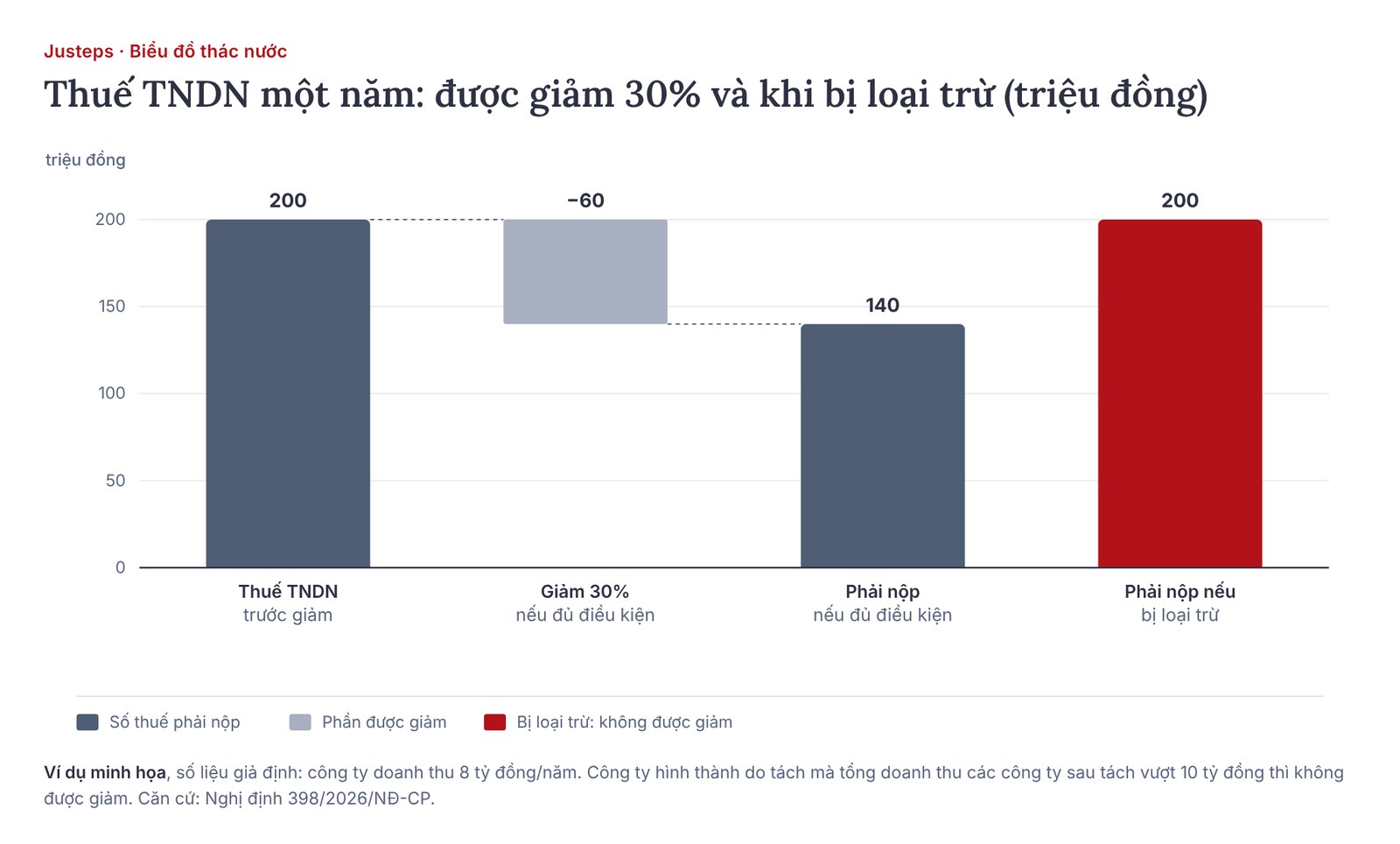
Figure 02. Annual CIT with the 30% reduction versus when excluded (VND million)
Illustrative example, assumed figures; basis: Decree 398/2026/ND-CP
Read left to right: VND 200 million less the 60 million reduction leaves 140 million; the red bar shows the full 200 million payable if the spun-off company falls into an exclusion case.
Corporate restructuring options and tax points to check
The table below summarises five common options for mid-sized companies and family groups.
| Option | Legitimate business reason | Tax points to check | Common risks |
|---|---|---|---|
| Spinning off a business line into a subsidiary | Ring-fencing risk, separate fundraising, segment management | Incentive conditions, tax reductions on division or separation; related-party transactions | Splitting to fit revenue thresholds is excluded |
| Merging or consolidating group companies | Lower overheads, unified systems | Succession to tax obligations, loss carry-forward, invoices | Merged company still owes tax or has unresolved invoices |
| Setting up a holding company | Concentrating ownership, preparing for succession | Tax on capital transfers, personal income tax when individuals transfer capital | Unreasonably low transfer price |
| Contributing assets to a new company | Placing assets in the entity that uses them | Revaluation gains, VAT, registration fee | Missing valuation records or title transfer documents |
| Dissolving or closing the tax code of dormant companies | Simplifying the structure, cutting compliance costs | Unpaid business licence fees, late payment interest, final tax finalisation | Abandoned entities accumulate debts and risks for managers |
Related-party transactions after restructuring
After a spin-off or the creation of a holding company, group companies often buy from, lend to and use shared services of each other. These are related-party transactions that must be priced at arm's length and declared under Decree No. 132/2020/ND-CP on tax administration for enterprises with related-party transactions and its amendments. Companies need written intra-group contracts, a pricing basis and evidence that services were actually provided.
Tax on transferring assets and capital
When contributing assets as capital, the difference between the revalued amount and the net book value may give rise to taxable income. Certain asset contributions and asset transfers on division, separation or merger are not subject to VAT declaration and payment under Law on Value-Added Tax No. 48/2024/QH15 and its guiding documents, but full documentation is required. When individuals transfer their capital to a holding company, personal income tax on capital transfers applies and the transfer price must be reasonable.
Cleaning up dormant entities
Many groups still have "dormant" entities with unpaid business licence fees and late payment interest. The National Assembly Resolution on special policies for handling business licence fee debts and late payment interest applies from 21/11/2026 to 30/6/2028 to taxpayers with tax code status 03 or 06 (as at 23/10/2026), without the need to file a debt cancellation request. This is a good time to review and properly close entities no longer in use.
A corporate restructuring process with tax risk control
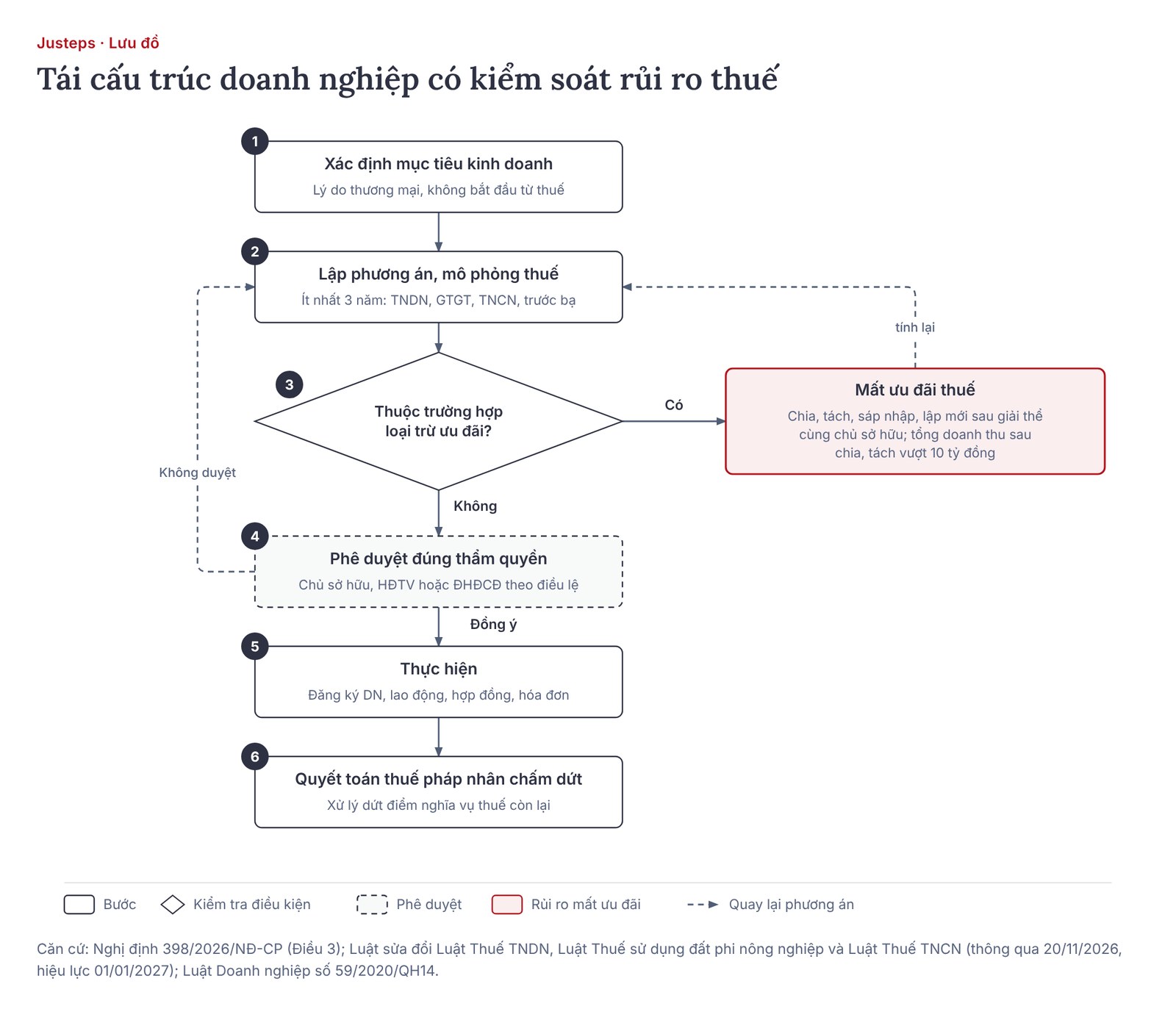
Figure 01. Flowchart of restructuring with tax risk control
Basis: Decree 398/2026/ND-CP (Article 3); law amending the CIT, Non-agricultural Land Use Tax and PIT laws (effective 01/01/2027); Enterprise Law No. 59/2020/QH14
The step 3 diamond checks the incentive exclusion cases before approval; the Yes branch leads to the red loss-of-incentive box and back to re-modelling. The dashed box is approval by the competent body under the charter.
The tax simulation should cover at least three years, including corporate income tax, VAT, owners' personal income tax, registration fees and the extra compliance cost of additional entities. The exclusion check must answer: is the new company formed by division, separation, merger or re-establishment after dissolution by the same owner; what is total revenue after division; can current investment incentives be carried over.
Approval must be given by the competent body under Law on Enterprises No. 59/2020/QH14 as amended in 2025 and the charter, usually the owner, Members' Council or General Meeting of Shareholders for decisions on division, separation or merger. At implementation, besides enterprise registration, the company must handle the transfer of employees, ongoing contracts, invoices and tax finalisation of the terminated entity.
Risks of restructuring purely for tax
Losing incentives and repaying tax previously reduced; where actual revenue exceeds the VND 10 billion threshold, late payment interest also applies under Article 24 of Decree No. 252/2026/ND-CP. Having related-party prices adjusted by the tax authority and intra-group service costs disallowed if they cannot be substantiated. Tax arising on asset transfers without cash flow planned for it. On top of that, a multi-entity structure increases accounting, audit and reporting costs, which may exceed the tax saved.
Legal basis and sources
- Decree No. 398/2026/ND-CP on personal income tax and corporate income tax reductions, issued and effective from 29/10/2026, applicable to the 2026 and 2027 tax periods.
- National Assembly Resolution No. 43/2026/QH16.
- Law amending and supplementing certain articles of the Law on Corporate Income Tax, the Law on Non-Agricultural Land Use Tax and the Law on Personal Income Tax, passed on 20/11/2026, generally effective from 01/01/2027.
- Law on Corporate Income Tax No. 67/2025/QH15.
- Law on Value-Added Tax No. 48/2024/QH15.
- Law on Enterprises No. 59/2020/QH14, as amended and supplemented in 2025.
- Decree No. 132/2020/ND-CP on tax administration for enterprises with related-party transactions and its amendments.
- Decree No. 252/2026/ND-CP (Article 24 on late payment interest).
- National Assembly Resolution on special policies for handling business licence fee debts and late payment interest, applicable from 21/11/2026 to 30/6/2028.
How Justeps supports businesses
- Strategic restructuring: designing restructuring options for companies and groups based on business objectives.
- Tax, Customs & International Trade: simulating tax obligations for each option, checking incentive conditions and exclusions.
- Corporate, M&A: documents for division, separation, merger, consolidation, capital transfers and asset contributions.
- Succession planning: holding structures for transferring the business to the next generation.
Contact Justeps for advice on the right option for your company.
Frequently asked questions
If a company with VND 18 billion revenue splits into two companies of VND 9 billion each, do they get the 30% CIT reduction?
If the separation takes place after Resolution No. 43/2026/QH16 took effect and the total revenue of the post-separation companies exceeds VND 10 billion, the reduction under Decree No. 398/2026/ND-CP does not apply.
Is a new company set up after dissolving an old company with the same owner eligible for the three-year exemption?
No. The amending law passed on 20/11/2026 excludes enterprises newly established after dissolving an enterprise with the same owner from the three-year SME exemption.
Are shared services between a parent and a subsidiary related-party transactions?
Yes. The company needs contracts, a cost allocation method, arm's length pricing and evidence that services were actually provided for the costs to be deductible.
How long does corporate restructuring take?
From agreeing the option to completing registration and tax finalisation usually takes 3 to 9 months, depending on the number of entities, assets to transfer and the state of tax records.
Should dormant companies in the group be closed?
They should be reviewed. Dormant entities still carry obligations and risks for managers. If their tax code status is 03 or 06, consider the policy on business licence fee debts and late payment interest applicable until 30/6/2028.
Related articles
- Preparing to raise investment: data room, valuation and the term sheet clauses to negotiate
- Private placement of shares by a non-public joint stock company: internal process and registration of changes
- Personal data protection in HR under Vietnam's 2025 Law on Personal Data Protection
This article is for reference and reflects the regulations in force at the time of publication. Please consult Justeps for advice tailored to your company’s records and situation.
For further information, please contact:
📩 Email: info@justeps.vn
🌐 Website: https://justepslegal.com · https://justeps.vn
🌐 Page: Justeps
☎️ Hotline (Zalo): 096 172 2607
📍 Thanh Xuan Office: 12th Floor, Licogi 13 Tower, 164 Khuat Duy Tien Street, Thanh Xuan Ward, Hanoi, Vietnam
📍 Ha Dong Office: LK06B, No.10, Dong Dua Area, Ha Dong Ward, Hanoi, Vietnam
📍 Ho Chi Minh City Branch: 528 Le Van Sy, Ho Chi Minh City, Vietnam
📍 Hai Phong Office: Truong Thinh Village, Ha Dong Commune, Hai Phong, Vietnam
📍 Quang Ninh Office: Van Don Special Zone, Quang Ninh Province, Vietnam





