Many companies enter a fundraising round with a polished pitch deck and impressive growth figures, only to lose a month when investors ask for the shareholder register, capital contribution records or the contract with their largest customer. That delay usually costs valuation or sends the investor to another deal.
This article takes an operational view: what a company needs to prepare for its data room, who inside the company owns each part, how to read valuation and dilution, and which term sheet clauses deserve careful negotiation before signing.
Fundraising starts with internal housekeeping
Preparation should start six to nine months before formally approaching investors. The purpose is not to dress up the files but to find and fix in advance the points due diligence will certainly raise: whether charter capital has been fully contributed, whether shares are pledged or held by nominees, and whether the charter restricts transfers or grants pre-emptive rights to existing shareholders.
For a joint stock company, investors often require special rights such as preference shares or veto rights. These rights are only reliably effective when recorded in the charter and consistent with the share classes permitted by the Law on Enterprises No. 59/2020/QH14 (Article 114 sets out the share classes, including ordinary shares and preference shares). Reviewing the charter is therefore an early task, not something to leave until the contracts are signed.
Building the data room, index and owners
A data room is a document repository (usually an online folder with access controls) used by investors for due diligence. A good data room has a clear structure, consistent file names, and one person responsible for updating each group of documents and answering questions.
| Document group | Key documents | Owner | Common questions |
|---|---|---|---|
| Corporate | Enterprise registration certificates for every change, charter, shareholder register, board and GMS resolutions | Legal or company secretary | Capital not fully paid, unregistered transfers |
| Finance, tax | Three years of financial statements, management accounts, tax finalisation, tax audit minutes | Chief accountant, CFO | Early revenue recognition, tax arrears, expenses without invoices |
| Contracts | Contracts with top 10 customers and suppliers, loan agreements, guarantees | Legal, sales | Change-of-control and exclusivity clauses |
| People | Employment contracts of key staff, pay and bonus policy, ESOP, social insurance payments | HR | Missing non-compete undertakings, social insurance arrears |
| IP, data | Trademark certificates, source code assignment agreements, personal data policy | Legal, CTO | Source code held by individuals, no data processing procedure |
The data room may contain personal data of employees and customers. Before sharing, unnecessary information should be masked or anonymised and the legal basis for processing recorded under the Law on Personal Data Protection No. 91/2025/QH15. Access logs also show which investors are genuinely interested.
Fundraising preparation roadmap
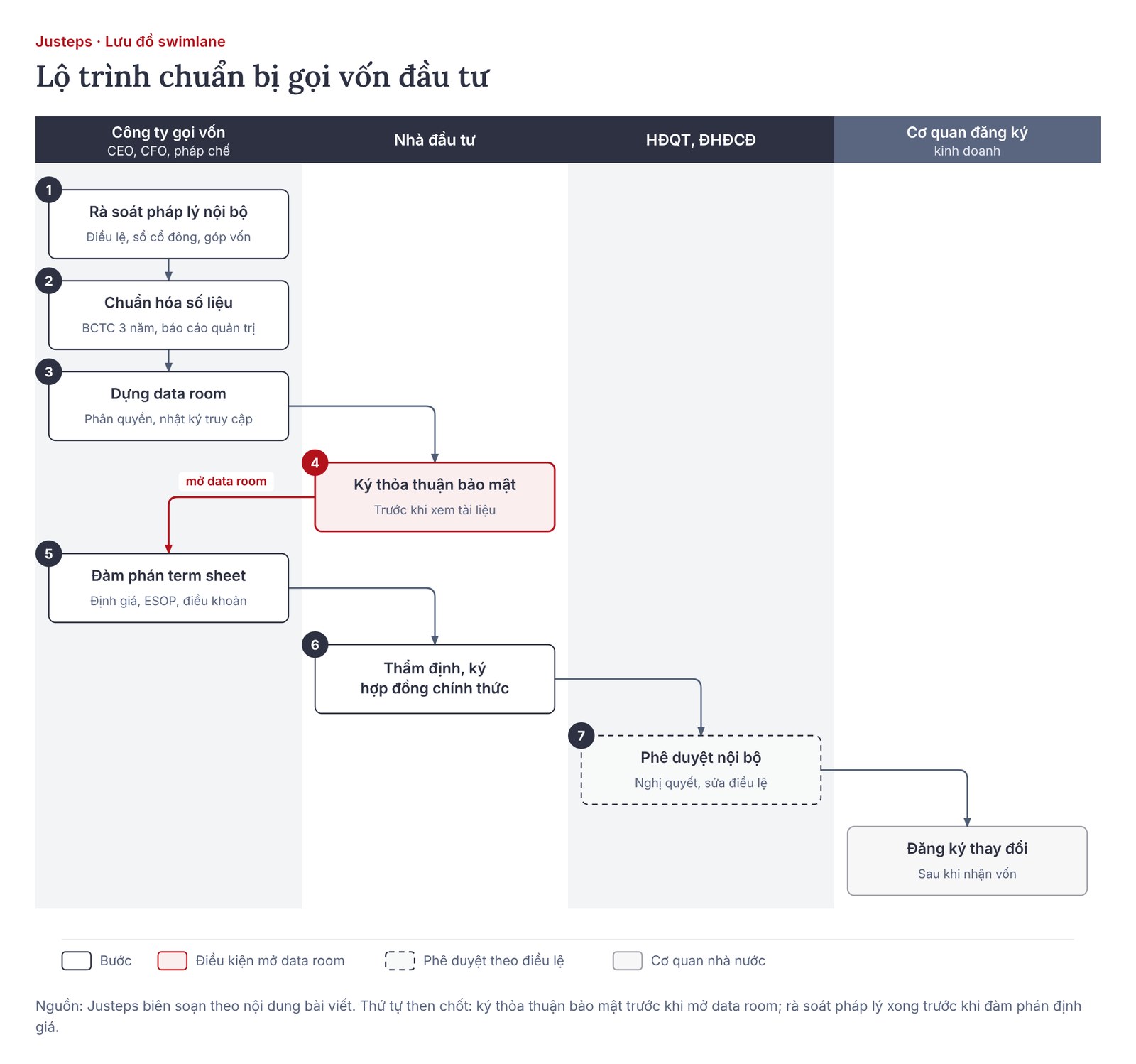
Figure 01. Swimlane of the fundraising preparation roadmap
Source: compiled by Justeps from the article
Each column is an acting party; follow the numbers top-down. The red box is the condition to sign the confidentiality agreement before opening the data room; the dashed box is internal approval before registering changes.
The most important sequencing rule is to sign a non-disclosure agreement before opening the data room, and to complete the legal review before negotiating valuation. A legal issue discovered late is usually converted by the investor into a lower price or heavier indemnities.
Valuation, reading pre-money, post-money and dilution correctly
Pre-money valuation is the company's value before the cash comes in; post-money valuation equals pre-money plus the investment. The investor's stake equals the investment divided by the post-money valuation. The point often missed is the employee stock option pool (ESOP): if the investor requires the pool to be included in the pre-money valuation, all of the dilution from the ESOP falls on existing shareholders.
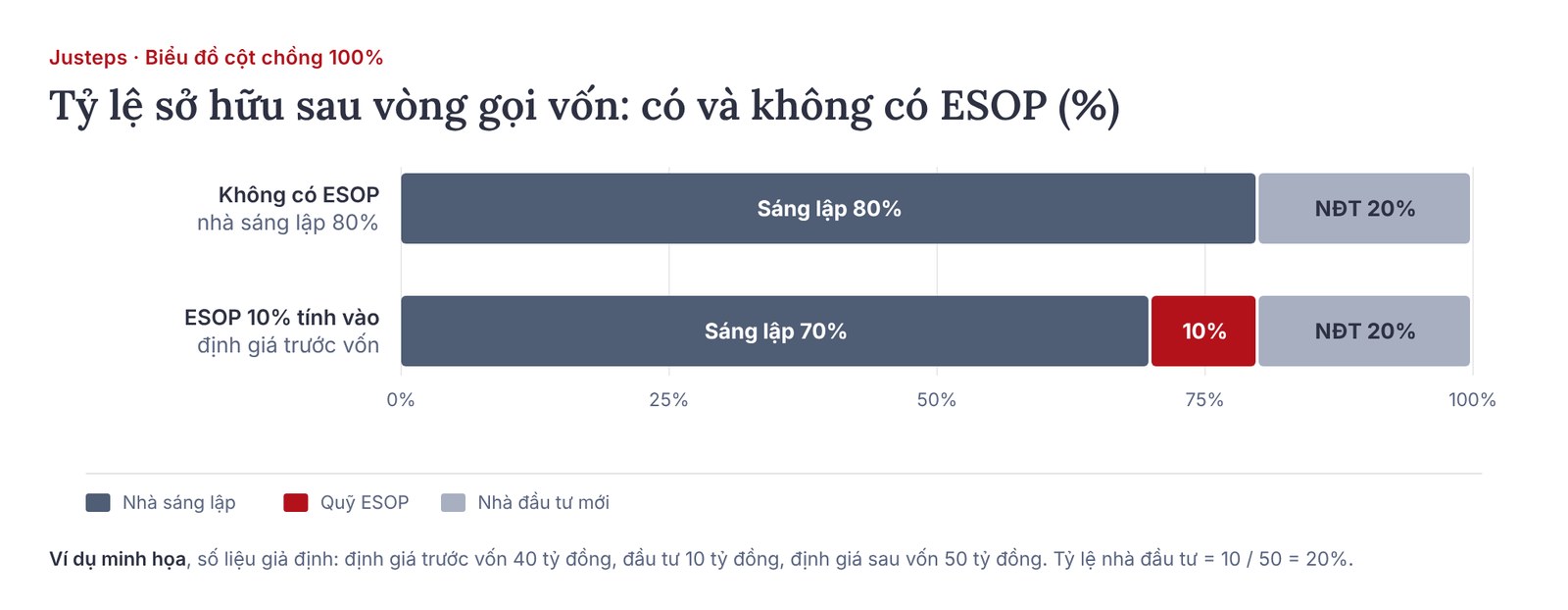
Figure 02. Post-round ownership with and without an ESOP pool (%)
Illustrative example, assumed figures: pre-money valuation VND 40 billion, investment VND 10 billion
Both bars total 100%; the red segment is a 10% ESOP pool counted in the pre-money, cutting founders from 80% to 70% while the investor keeps 20%.
When comparing two offers, convert them into the founders' actual post-round ownership rather than looking only at the headline valuation. The cap table should be prepared by the CFO and reconciled by legal against the shareholder register.
Term sheet clauses to negotiate
A term sheet is usually non-binding as to the obligation to invest, but confidentiality, exclusivity and cost clauses often take effect immediately. Whatever is agreed in the term sheet will almost certainly be copied into the definitive agreements, so this is the best moment to negotiate.
Liquidation preference and anti-dilution
A liquidation preference entitles the investor to get its money back first if the company is sold or dissolved. A 1x non-participating preference is common and balanced. Anti-dilution protection should use a weighted-average mechanism rather than a full ratchet to the lowest price of a later round.
Veto rights and board seats
The list of reserved matters requiring investor consent should be limited to changes in capital, charter amendments, major asset sales and related-party transactions. If the list is too broad, everyday operations such as signing customer contracts or hiring will be blocked. These rights must be transferred into the charter and governance regulations to bind the company.
Founder vesting, drag-along and tag-along
Investors often require founders' shares to vest over three to four years. Clarify what happens if a founder is dismissed without cause. A drag-along right should have a minimum price threshold and require approval by a majority of shareholders.
If the investor is a foreign entity, the company must determine whether the deal requires registration of capital contribution or share purchase under the Law on Investment No. 143/2025/QH15, and for large deals check the merger notification thresholds under the Law on Competition No. 23/2018/QH14. Both procedures directly affect the disbursement date.
Who does what inside the company
The CEO leads negotiations and is the single point of contact with investors. The CFO owns the numbers, the cap table and the financial model. In-house legal or outside counsel manages the data room, reviews the term sheet and prepares the approval documents. The board or the general meeting of shareholders approves the share issuance and charter amendments within its authority; after receiving the funds, the company registers the change in charter capital through the National Business Registration Portal. A task list with deadlines keeps the round from dragging on because of internal waiting.
Legal basis and sources
- Law on Enterprises No. 59/2020/QH14, as amended by Law No. 76/2025/QH15 (effective 1 July 2025).
- Law on Investment No. 143/2025/QH15.
- Law on Competition No. 23/2018/QH14 and Decree No. 35/2020/ND-CP guiding the Law on Competition.
- Law on Personal Data Protection No. 91/2025/QH15 (effective 1 January 2026).
- Decree No. 168/2025/ND-CP on enterprise registration.
- Civil Code No. 91/2015/QH13 (confidentiality and exclusivity agreements).
How Justeps supports businesses
- Pre-fundraising legal review and clean-up of capital contribution, shareholder register and charter issues (Business growth).
- Designing the data room structure, document index and Q&A process for due diligence.
- Reviewing and negotiating term sheets, investment agreements and shareholders' agreements (Capital markets, Corporate and M&A).
- Amending the charter and governance regulations to reflect investor rights (Governance standardisation).
Contact Justeps for advice on your company's funding round.
Frequently asked questions
Should the data room be opened to several investors at once?
It can be, but access should be staged: overview documents for the first round, detailed files such as customer contracts only for investors who have signed a term sheet.
Is a term sheet legally binding?
Most economic terms are usually stated as non-binding, but confidentiality, exclusivity, costs and governing law clauses are commonly binding. Read the effectiveness clause carefully before signing.
Can a limited liability company raise funds this way?
Yes, but the investor will contribute capital to become a member, and the company will usually need to convert into a joint stock company to issue preference shares or run a flexible ESOP.
How soon after receiving funds must the charter capital change be registered?
The company must register the change within the statutory deadline after completing the issuance. Prepare the resolutions and filing before the disbursement date to avoid delays.
What if the investor asks for overly broad warranties?
Limit them with an indemnity cap, a claims period and a disclosure letter. Matters disclosed in the data room should not be treated as breaches of warranty.
Related articles
- Private placement of shares by a non-public joint stock company: internal process and registration of changes
- Corporate restructuring and lawful tax optimisation: options and risks
- Ongoing legal advice under an annual package: comparing packages, scope and effective use
This article is for reference and reflects the regulations in force at the time of publication. Please consult Justeps for advice tailored to your company’s records and situation.
For further information, please contact:
📩 Email: info@justeps.vn
🌐 Website: https://justepslegal.com · https://justeps.vn
🌐 Page: Justeps
☎️ Hotline (Zalo): 096 172 2607
📍 Thanh Xuan Office: 12th Floor, Licogi 13 Tower, 164 Khuat Duy Tien Street, Thanh Xuan Ward, Hanoi, Vietnam
📍 Ha Dong Office: LK06B, No.10, Dong Dua Area, Ha Dong Ward, Hanoi, Vietnam
📍 Ho Chi Minh City Branch: 528 Le Van Sy, Ho Chi Minh City, Vietnam
📍 Hai Phong Office: Truong Thinh Village, Ha Dong Commune, Hai Phong, Vietnam
📍 Quang Ninh Office: Van Don Special Zone, Quang Ninh Province, Vietnam