Exclusive distribution agreements are usually signed in a good mood: the supplier needs someone to open the market, and the distributor wants a brand nobody else can sell. Three years later, when sales disappoint or the supplier wants to sell directly, the clauses that looked like formalities decide who loses money.
This article focuses on the four points that cause the most disputes in practice: sales targets, territory, termination and inventory at the end of the term, plus how to assign monitoring responsibilities within the business.
How an exclusive distribution agreement differs from an exclusive agency
Vietnamese law has no dedicated chapter for distribution agreements. In substance, distribution is a series of sale contracts with an added exclusivity commitment, while exclusive agency is a form of commercial agency specifically regulated by the Commercial Law No. 36/2005/QH11 (under Article 169 of the Commercial Law No. 36/2005/QH11)[1]. In an agency, the principal remains the owner of the goods delivered to the agent (under Article 170 of the Commercial Law No. 36/2005/QH11)[1]. Using the wrong label leads to the wrong pricing, invoicing and inventory-risk mechanism.
| Criterion | Exclusive distribution | Exclusive agency |
|---|---|---|
| Title to goods | Passes to the distributor upon purchase | Remains with the principal |
| Resale price | Set by the distributor, supplier may only recommend | Set by the principal |
| Income | Margin between purchase and resale price, volume rebates | Remuneration, commission |
| Inventory risk | Borne by the distributor unless a buy-back is agreed | Borne by the principal |
| Invoicing | Supplier invoices the distributor, distributor invoices customers | Under the consignment mechanism |
When drafting, state clearly that the relationship is purchase for resale, that the distributor sets retail prices and only receives recommended prices. A supplier imposing a minimum resale price may be examined under the Competition Law No. 23/2018/QH14.
Territory and scope of exclusivity
"Exclusive in Northern Vietnam" is the wording most prone to disputes. A usable territory clause defines four elements: a list of specific provinces and cities under current administrative boundaries; sales channels (wholesale, supermarkets, pharmacies, e-commerce platforms); customer groups reserved for the supplier's direct sales (national retail chains, projects, state agencies); and how to handle other distributors selling across into the territory.
Online channels are the new battleground. Which territory does a nationwide e-commerce store belong to? Specify who may open the official store, who handles orders from outside the territory and how sales are credited. Market-sharing agreements between competing businesses may be considered anti-competitive, so multi-tier distribution agreements should be reviewed under the Competition Law No. 23/2018/QH14.
Sales targets, what to measure and what happens if missed
The sales target is the price of exclusivity. The agreement should answer three questions: is the target measured by sell-in (distributor purchases from the supplier) or sell-out (sales to the market); is it monthly, quarterly or annual; and what are the consequences at each level of shortfall.
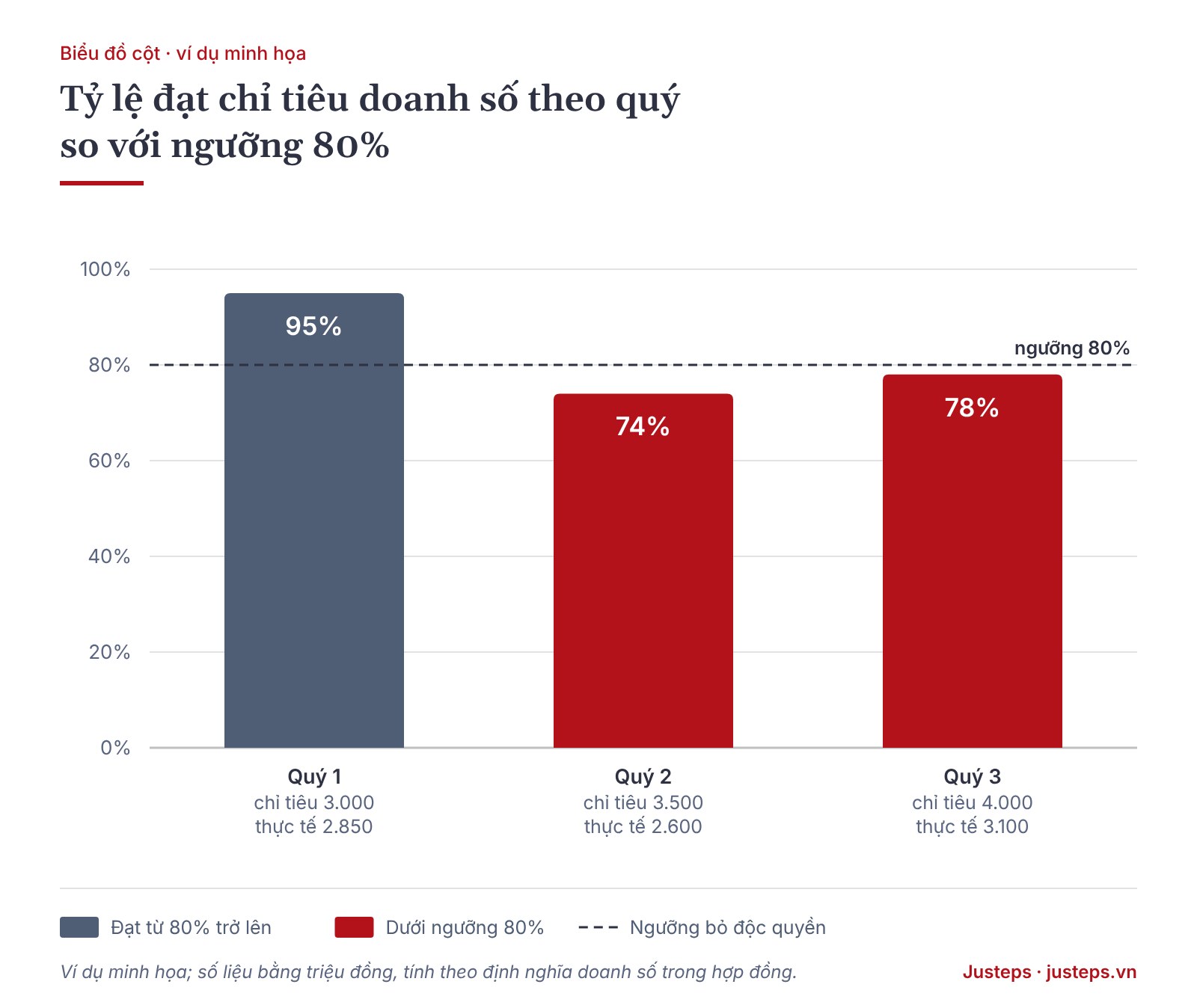
Figure 01. Quarterly sales target achievement against the 80% threshold
Illustrative example; figures in VND million
Each column is actual sales as a share of the quarterly target. Red columns fall below the dashed 80% line; two such consecutive quarters allow the supplier to remove exclusivity.
A reasonable mechanism is usually tiered. Below 90% reduces the rebate; below 80% for two consecutive quarters lets the supplier switch to non-exclusive distribution; only below 60% for the full year is a ground for termination. This prevents the supplier from terminating over a single weak quarter while giving the distributor time to recover. Next year's target should follow a formula (for example, growth in line with the market) rather than "to be agreed later".
Operationally, the distributor's sales team should report monthly sales using the contractual definition, with reconciliation confirmed by the supplier. Figures confirmed by both parties are the most important evidence in any dispute.
Terminating an exclusive distribution agreement
The agreement should separate three groups: expiry without renewal, termination for breach, and termination for convenience with a notice period and compensation. For termination for breach, list which breaches are material (non-payment beyond 60 days, selling competing products, systematic sales outside the territory) and the cure period before termination. The terminating party must notify the other immediately; failure to notify that causes damage must be compensated (under Article 428 of the Civil Code No. 91/2015/QH13)[2].
Contractual penalties are agreed by the parties but may not exceed 8% of the value of the breached obligation (under Article 301 of the Commercial Law No. 36/2005/QH11)[1]; damages are a separate remedy requiring proof of actual loss (under Article 302 of the Commercial Law No. 36/2005/QH11)[1]. Many distributors claim "reimbursement of market development costs" upon early termination; this is only secure if the agreement sets out a specific formula.
Inventory and handover at the end of the agreement
This is the clause most often left blank and the one causing the greatest loss. When the agreement ends, the distributor may still hold billions of dong worth of goods, some close to expiry, while the new distributor has already started selling.
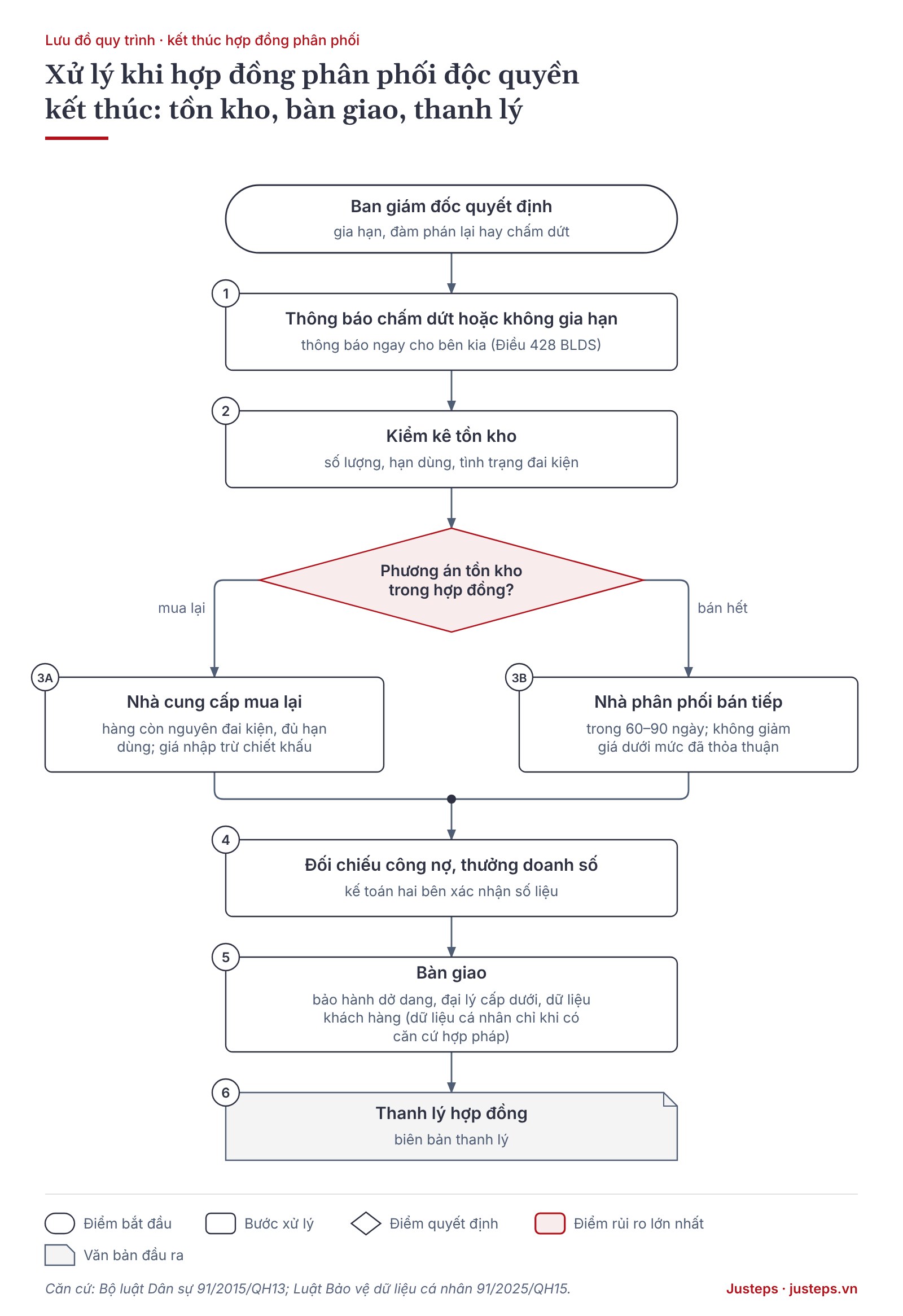
Figure 02. Flowchart for handling the end of an exclusive distribution agreement
Legal basis: Civil Code 91/2015/QH13; Law on Personal Data Protection 91/2025/QH15
Follow the arrows from the board’s decision to contract liquidation. The red diamond is where the inventory option set in the contract is applied: buy-back or sell-off.
The agreement should pre-select one of two options. Buy-back: the supplier repurchases goods in original packaging with at least a minimum remaining shelf life, at the purchase price less an agreed discount. Sell-off: the distributor may continue selling for 60 to 90 days, without discounting below a set level to avoid dumping. Alongside this come the transfer of pending warranty claims, the list of sub-dealers and customer data. Customer data relating to individuals may only be transferred on a lawful basis under the Personal Data Protection Law No. 91/2025/QH15.
Who monitors what within the business
Legal or the contract owner keeps a calendar of milestones: renewal date, deadline for notice of non-renewal and target review dates. Sales tracks performance and monthly reconciliation reports. Accounting reconciles receivables and quarterly rebates. Three months before expiry, management should decide whether to renew, renegotiate or terminate, leaving enough time to deal with inventory.
Legal basis and sources
- Commercial Law No. 36/2005/QH11.
- Civil Code No. 91/2015/QH13, effective from 1 January 2017.
- Competition Law No. 23/2018/QH14.
- Personal Data Protection Law No. 91/2025/QH15, effective from 1 January 2026.
How Justeps supports businesses
- Drafting and reviewing exclusive distribution agreements, target and territory schedules through our Advisory and compliance services.
- Setting up contract management processes, milestone calendars and sales reconciliation templates under our Operations setup package.
- Advising on multi-tier distribution structures when expanding markets with Business growth.
- Representing clients in termination, settlement and inventory negotiations; international trade support when the supplier is overseas via Tax, Customs & International Trade.
Contact Justeps for advice on your specific case.
Frequently asked questions
Must an exclusive distribution agreement be registered with the authorities?
Usually not. However, a foreign-invested distributor must meet the conditions for distribution activities under the regulations on trading in goods by foreign-invested enterprises.
May the supplier sell directly in the exclusive territory?
Only if the agreement allows it, for example for reserved customer groups. Without an exception, direct sales may breach the exclusivity commitment.
Can we impose a 20% penalty for wrongful termination?
Contractual penalties in commercial relations may not exceed 8% of the value of the breached obligation. Larger losses must be claimed as damages and proven.
Should the target be sell-in or sell-out?
Sell-in is easy to measure and reconcile through invoices; sell-out reflects real consumption but needs a reliable reporting system. Many agreements use sell-in for target assessment and sell-out as a reference for adjustments.
After expiry, may the distributor keep using the brand on signage?
No, except during a sell-off period if the agreement allows it. The agreement should set deadlines for removing signage and ceasing use of store names and marketing materials.
Related articles
- Handling breach of contract: notice, negotiation, mediation and dispute resolution
- Software development contracts: acceptance, warranty and source code ownership
- Setting up a tech startup in Vietnam: capital structure, ESOP and source code ownership
This article is for reference and reflects the regulations in force at the time of publication. Please consult Justeps for advice tailored to your company’s records and situation.
For further information, please contact:
📩 Email: info@justeps.vn
🌐 Website: https://justepslegal.com · https://justeps.vn
🌐 Page: Justeps
☎️ Hotline (Zalo): 096 172 2607
📍 Thanh Xuan Office: 12th Floor, Licogi 13 Tower, 164 Khuat Duy Tien Street, Thanh Xuan Ward, Hanoi, Vietnam
📍 Ha Dong Office: LK06B, No.10, Dong Dua Area, Ha Dong Ward, Hanoi, Vietnam
📍 Ho Chi Minh City Branch: 528 Le Van Sy, Ho Chi Minh City, Vietnam
📍 Hai Phong Office: Truong Thinh Village, Ha Dong Commune, Hai Phong, Vietnam
📍 Quang Ninh Office: Van Don Special Zone, Quang Ninh Province, Vietnam