
Automating a production line, merging two departments, moving accounting to new software: these decisions make business sense but often lead to workforce reduction. Done in the wrong order, the company may be forced to reinstate employees, pay wages for the days they were not allowed to work and pay compensation, not to mention the effect on the morale of those who stay.
The Labor Code No. 45/2019/QH14 allows workforce reduction when there are structural or technological changes, but sets a fairly strict procedure. This article takes an operational view: who does what, in what order, and which records prove the company acted correctly.
When workforce reduction for structural or technological change is allowed
Under Clause 1, Article 42 of the Labor Code, structural and technological changes include: changes to the organisational structure or reorganisation of labour; changes to processes, technology, machinery and production or business equipment associated with the business lines; and changes to products or product structure. The change must be genuine and recorded in a decision by the competent body in the company, such as a resolution of the Members' Council or Board, or a decision of the Director under delegated authority.
This is the most common point of dispute. If a company lets employees go and a few months later hires someone new into the same position, it will struggle to prove the position was eliminated by restructuring. Records should therefore show the organisation chart before and after, the job descriptions removed or merged, and the business reason for the change.
The labour utilisation plan, the central document
Where a change affects the jobs of many employees, the company must prepare a labour utilisation plan under Article 44 of the Labor Code; where new jobs are available, retraining for continued employment takes priority (Clause 3, Article 42). The plan must list the number and names of employees retained, retrained, retiring, moving to part-time work and whose contracts must be terminated, together with the measures and financial resources for implementation.
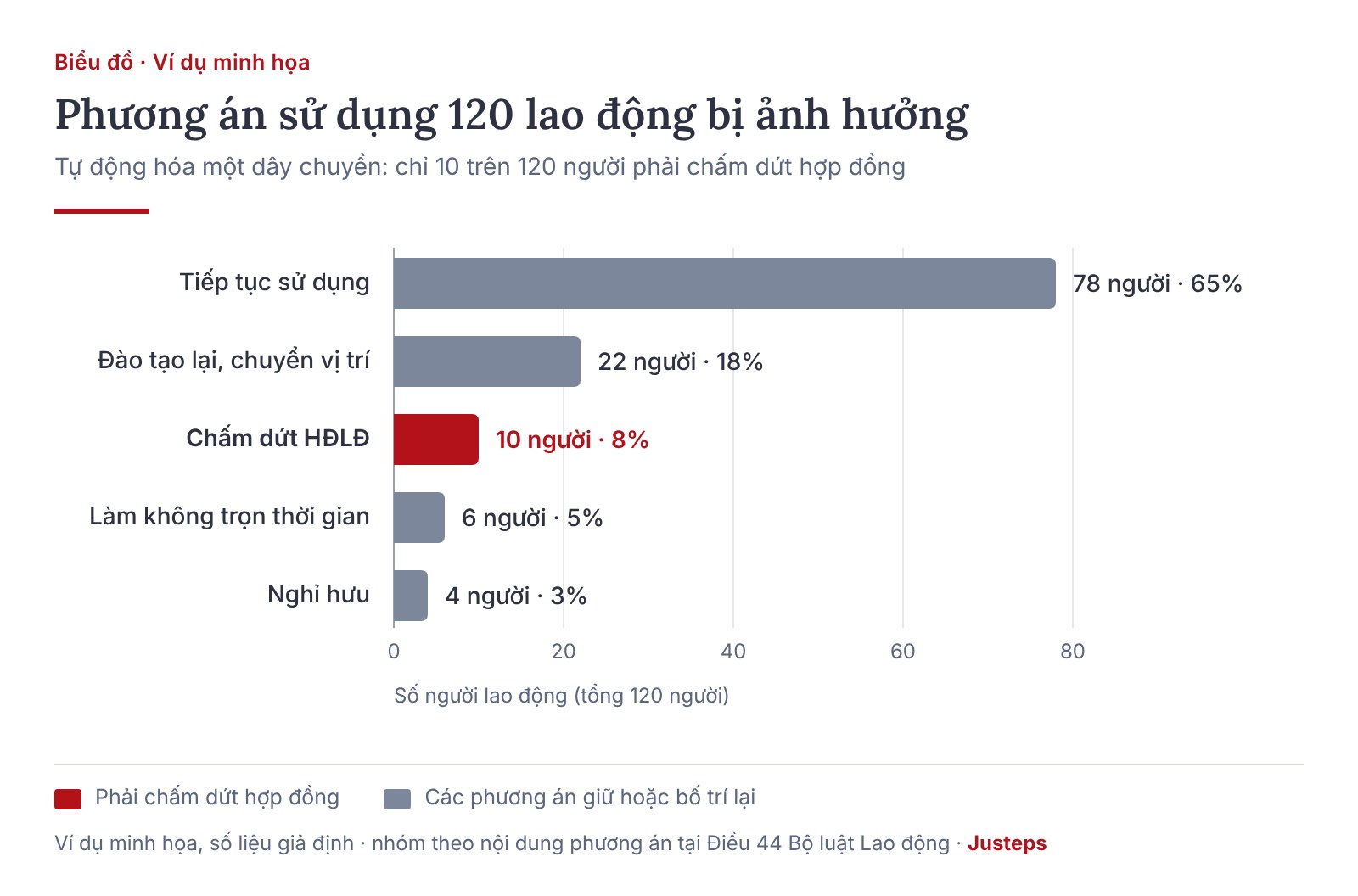
Figure 01. Labour-use plan for 120 affected employees
Illustrative example, assumed figures
Each bar counts employees under one option; the red bar is the 10 whose contracts end, the rest are kept or redeployed.
In the example, only 10 of 120 people have their contracts terminated. A plan showing the company considered retraining and redeployment before letting people go stands up much better in a dispute. Selection criteria for termination (skills, evaluation results, retrainability) should be written down, applied consistently and not based on gender, age, marital status or union membership.
Groups requiring extra care
The company should separately review female employees who are pregnant, on maternity leave or raising a child under 12 months, employees under medical treatment, and union officers. The Labor Code contains specific protections for these groups; including them in the termination list without careful advice often leads to disputes and a high risk of losing.
Step-by-step procedure
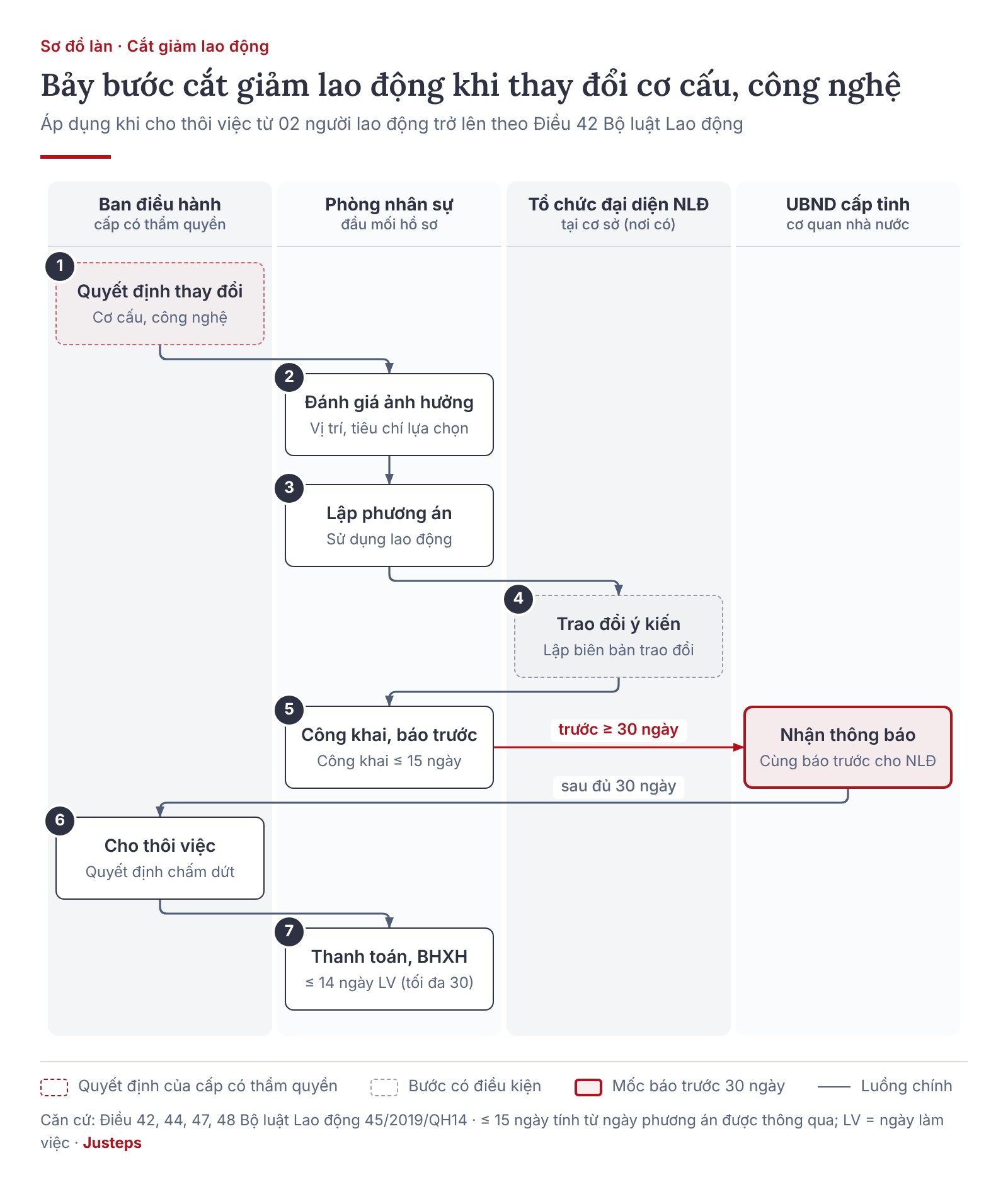
Figure 02. Seven steps for redundancy due to structural or technological change
Basis: Articles 42, 44, 47, 48, Labour Code 45/2019/QH14
Each column is a party; the red box is the 30-day prior notice to the provincial People's Committee and employees, after which termination may proceed.
Under Clause 6, Article 42, when letting 2 or more employees go, the company must consult the grassroots employee representative organisation (where one exists) and give 30 days' notice to the provincial People's Committee and to the employees. The labour utilisation plan must be made public to employees within 15 days of its adoption. Consultation minutes, the notice stamped as received by the authority, and evidence of publication are the three documents to keep carefully.
As for roles, HR leads the paperwork, legal or outside counsel checks the procedure, and line managers take part in the conversation with each employee. Management should agree a single message before the announcement so that managers do not each explain it differently.
Choosing the right form of termination
Not every case should rely on the structural or technological change ground. Many companies combine approaches: negotiating mutual termination with those who voluntarily accept a support package, and applying Article 42 only to the rest.
| Criterion | Structural/technological change | Mutual termination | Unilateral termination |
|---|---|---|---|
| Basis | Clause 11 Article 34, Article 42 of the Labor Code | Clause 3 Article 34 of the Labor Code | Article 36 of the Labor Code |
| Main condition | A genuine structural or technological change; a labour utilisation plan | Both parties voluntarily agree in writing | Only in cases listed by law |
| Procedure | Consult the employee representative body, publish the plan, give 30 days' notice to the provincial People's Committee and employees | Minutes or written agreement | Notice according to contract type |
| Minimum allowance | Job-loss allowance: 1 month's wage per year, at least 2 months | Severance allowance: half a month per year, plus agreed support | Severance allowance |
| Main risk | Treated as unlawful termination if no plan or the change is not genuine | Seen as coercion if there is no evidence of voluntariness | Unsuitable for restructuring redundancies |
Allowances and payment
Employees let go under Article 42 receive a job-loss allowance under Article 47 of the Labor Code: 1 month's wage for each year of work, but at least 2 months' wages. The working period for the allowance is total actual working time minus time covered by unemployment insurance and time for which an allowance was previously paid; the wage basis is the average of the 6 months before leaving. Payments are due within 14 working days of termination, extendable to no more than 30 days in cases of structural or technological change (Article 48). The company must also complete confirmation of social insurance contribution periods and return the employee's documents.
The budget should cover both statutory allowances and any extra support used to encourage mutual agreement. For companies undergoing a broader restructuring, see Justeps' strategic restructuring services.
Legal basis and sources
- Labor Code No. 45/2019/QH14, effective 1 January 2021: Clauses 3 and 11 of Article 34, Articles 36, 42, 44, 46, 47 and 48.
- Law amending and supplementing certain articles of the Labor Code, the Law on Archives, the Law on Gender Equality, the Law on Red Cross Activities and the Law on Employment, passed on 21 November 2026, effective 1 March 2027.
- Decree No. 145/2020/ND-CP detailing the Labor Code on working conditions and labour relations.
- Law on Social Insurance No. 41/2024/QH15; the 2025 Law on Employment on unemployment insurance.
How Justeps supports businesses
- Redesigning the organisational structure and the labour utilisation plan (Strategic restructuring).
- Reviewing the procedure and drafting consultation minutes, notices and termination decisions (Advisory and regulatory compliance).
- Designing support packages and mutual termination documents.
- Updating internal rules, job descriptions and pay scales after restructuring (Governance standardisation).
- Training line managers on how to hold conversations with employees (In-house training).
Contact Justeps before announcing a reduction plan to have the procedure reviewed.
Frequently asked questions
Must the authority be notified when only 1 person is let go for restructuring?
The duty to consult the representative body and give 30 days' notice to the provincial People's Committee applies when 2 or more employees are let go. For 1 person, the company still needs a genuine structural change and must pay the job-loss allowance.
Who do we consult if there is no trade union?
The consultation duty applies where a grassroots employee representative organisation exists. Where there is none, the company should still hold a dialogue with affected employees and keep minutes to show transparency.
Can we pay more than the statutory allowance?
Yes. The statutory level is a minimum. Extra support is often used to encourage agreement and reduce disputes; it should be stated clearly in writing and PIT obligations considered.
Can the position be refilled after the reduction?
In principle a position removed by restructuring is no longer needed. If a similar position is refilled shortly afterwards, former employees have grounds to argue the termination was unlawful.
What changes from 1 March 2027?
The law amending the Labor Code passed on 21 November 2026 revises some labour relations provisions. Companies planning reductions in 2027 should check the consolidated text at the time.
Related articles
- Designing an annual in-house legal training programme for companies
- Family business succession to the next generation: family charter and a five-year roadmap
- Merging two subsidiaries within a group: HR, contracts, tax and invoices roadmap
This article is for reference and reflects the regulations in force at the time of publication. Please consult Justeps for advice tailored to your company’s records and situation.
For further information, please contact:
📩 Email: info@justeps.vn
🌐 Website: https://justepslegal.com · https://justeps.vn
🌐 Page: Justeps
☎️ Hotline (Zalo): 096 172 2607
📍 Thanh Xuan Office: 12th Floor, Licogi 13 Tower, 164 Khuat Duy Tien Street, Thanh Xuan Ward, Hanoi, Vietnam
📍 Ha Dong Office: LK06B, No.10, Dong Dua Area, Ha Dong Ward, Hanoi, Vietnam
📍 Ho Chi Minh City Branch: 528 Le Van Sy, Ho Chi Minh City, Vietnam
📍 Hai Phong Office: Truong Thinh Village, Ha Dong Commune, Hai Phong, Vietnam
📍 Quang Ninh Office: Van Don Special Zone, Quang Ninh Province, Vietnam





