
In many companies, in-house legal training happens only after something goes wrong: a fine for a non-compliant advert, a lost case over a dismissal done without proper procedure, or when a new law is all over the news. Each time it is one general session for the whole company, and few people come away knowing what to do differently.
An annual in-house legal training programme solves two things: the right people learn the right content, and they learn it before new rules take effect rather than after an inspection. This article explains how to design that programme, from identifying needs to measuring results.
Where in-house legal training should start
The best source of needs is the company's own records: the year-end legal review, the list of incidents, complaints, penalty decisions and the questions legal receives most often. If the same mistake recurs across branches, that signals a training need, not just a file to fix.
The second source is the effective-date calendar of new rules. For example, a 2027 programme should cover in Q1: the new regional minimum wage applying from 1 January 2027 under Decree No. 399/2026/ND-CP; the 13-day holiday calendar and new rules on labour outsourcing under the Law amending and supplementing certain articles of the Labor Code and related laws effective 1 March 2027; and the higher VND 10 billion revenue threshold for choosing the tax calculation method under the Law amending the Law on CIT, the Law on Non-agricultural Land Use Tax and the Law on PIT effective 1 January 2027.
Grouping audiences and topics
A common mistake is teaching one curriculum to everyone. Sales staff do not need to know how late-payment interest on tax is calculated, but they do need to know why they cannot rewrite the penalty clause in a contract template. The table below is the grouping Justeps commonly uses.
| Group | Key topics | Format | Frequency |
|---|---|---|---|
| Executive management | Managers' liability, signing authority, related-party transactions, major legal changes of the year | Workshop, 2 sessions/year | Q1 and Q4 |
| Middle managers | Labour discipline, employee evaluation, spending approval, delegation | 2-hour module | Quarterly |
| HR, accounting | Minimum wage, holidays, social insurance, tax, invoices, employee personal data | In-depth modules with cases | Tied to effective dates of new rules |
| Sales, procurement | Contract templates, penalty clauses, advertising, promotions, customer data | 2-hour module with test | Twice a year |
| New hires | Labour rules, code of conduct, confidentiality, occupational safety | Day-one onboarding | On hiring |
| All employees | Data protection, anti-harassment, whistleblowing channel | Short online module | Annually |
Mandatory and recommended content
Some training is a legal obligation. Occupational safety and health training is the employer's responsibility under Article 14 of the Law on Occupational Safety and Health No. 84/2015/QH13, with content and duration guided by Decree No. 44/2016/ND-CP. These records must be kept carefully because they are inspected regularly.
The rest is not mandatory but clearly reduces risk. Data protection is an example: under Clause 1, Article 8 of Decree No. 363/2026/ND-CP, collecting data without consent as required or failing to apply data protection measures can be fined VND 20 to 40 million for individuals, and organisations are fined double. These acts usually occur among front-line staff such as sales advisers, customer service and recruiters, so they must be trained, not just IT.
Designing the annual programme
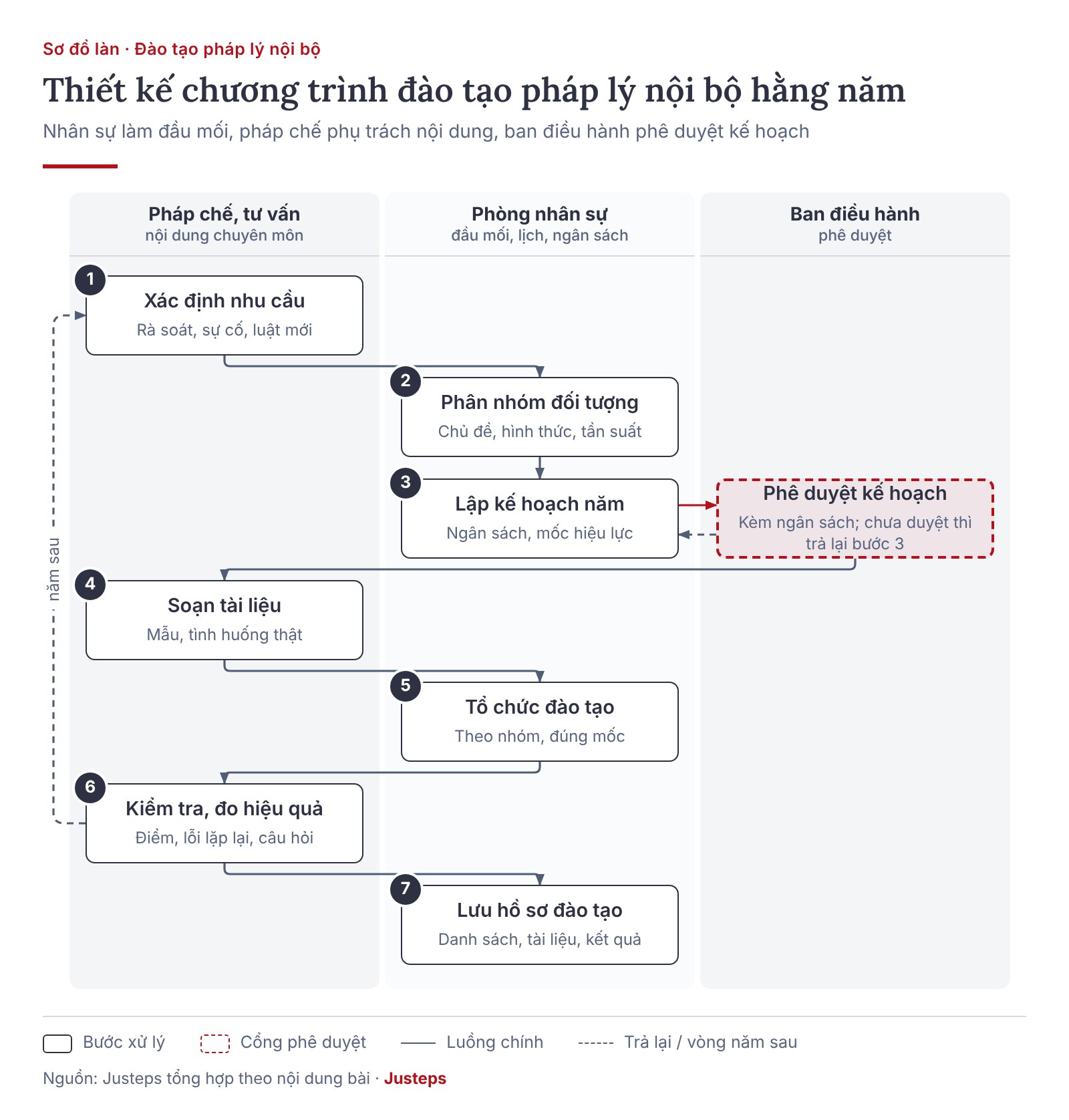
Figure 01. Seven steps to design an annual in-house legal training programme
Source: compiled by Justeps
Each column is a function; the red dashed box is management's approval of plan and budget, dashed arrows mean send-back or the next-year loop.
The lead should be HR (calendar, budget, records) working with in-house legal or an external adviser (content). Management should approve the annual plan with its training budget, so department heads do not treat sessions as something to postpone.
Materials should use the company's own files: contract templates in use, current procedures, real incidents (anonymised). A real case of a customer refusing to pay because there was no acceptance record is more persuasive than ten pages of quoted law.
Allocating hours and measuring results
Hours should be proportional to each group's risk. HR and accounting usually need the most because they deal directly with rules that change every year.
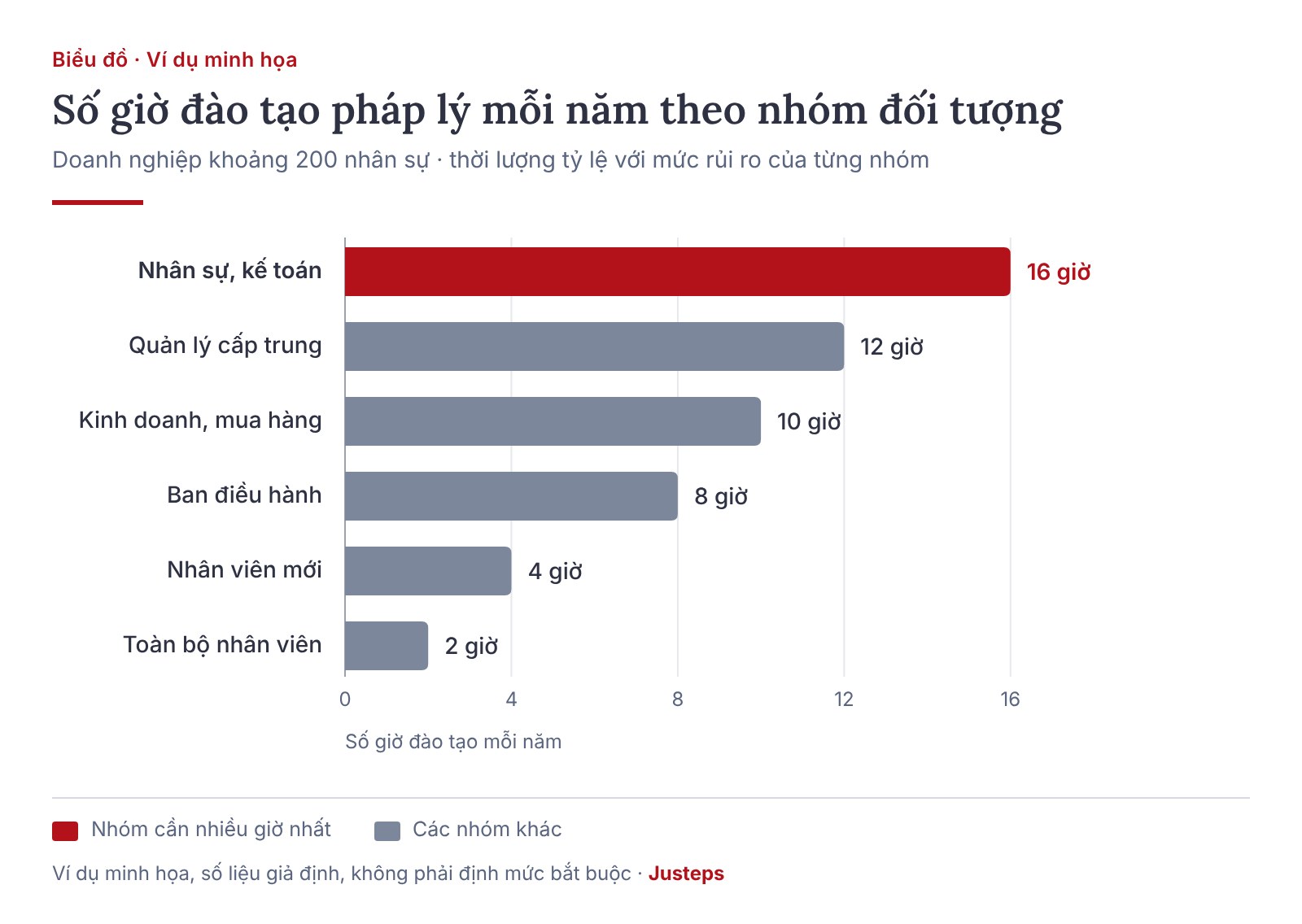
Figure 02. Annual legal training hours by audience
Illustrative example, assumed figures
Longer bars mean more hours; the red bar is HR and accounting, where rules change most.
Measurement should not stop at attendance sheets. Three more practical indicators are: scores on a short test after each module; the number of findings of the same type in next year's legal review compared with this year's; and the number of repeated questions sent to legal. If contract errors do not fall after training, review the content or the contract template itself.
Keeping training records
For each module, keep the plan, materials, attendance list with signatures or electronic confirmation, and test results. These records help in disciplinary cases: the company can show employees were informed of the labour rules and relevant policies. Where training data contains personal information, storage must also comply with the Law on Personal Data Protection No. 91/2025/QH15.
Linking training to line managers
Training only works when line managers require staff to apply it right after the session. A simple method is for each department head to receive, after every module, a list of three changes to make in the department's process (for example, using the new contract template or adding a data-processing consent line to the customer registration form) and to report results after 30 days. When this is included in managers' evaluations, adoption rises markedly.
Companies without enough in-house legal staff can outsource the content and keep the organisation in-house. See Justeps' in-house training programme.
Legal basis and sources
- Labor Code No. 45/2019/QH14 and the Law amending and supplementing certain articles of the Labor Code, the Law on Archives, the Law on Gender Equality, the Law on Red Cross Activities and the Law on Employment, effective 1 March 2027.
- Law on Occupational Safety and Health No. 84/2015/QH13 (Article 14 on occupational safety and health training); Decree No. 44/2016/ND-CP.
- Law on Personal Data Protection No. 91/2025/QH15, effective 1 January 2026; Decree No. 363/2026/ND-CP on administrative penalties in the data sector, effective 11 November 2026.
- Decree No. 399/2026/ND-CP on minimum wages, applying from 1 January 2027.
- Law amending and supplementing certain articles of the Law on CIT, the Law on Non-agricultural Land Use Tax and the Law on PIT, passed on 20 November 2026, effective 1 January 2027.
How Justeps supports businesses
- Designing an annual in-house legal training framework by audience group (In-house training).
- Preparing materials and cases from the company's real files, and delivering the sessions.
- Periodic legal reviews to identify training needs (Advisory and regulatory compliance).
- Drafting labour rules, codes of conduct and related procedures (Governance standardisation).
Contact Justeps for a training programme proposal.
Frequently asked questions
Are companies required to provide legal training to employees?
There is no general obligation, except for specific content such as occupational safety and health training. However, companies must communicate their labour rules and are responsible for violations committed by employees in the course of work, so training is an effective risk control.
In person or online?
Content that needs case discussion (executives, managers) is best in person. General content for many people (data protection, code of conduct) suits short online modules with a test.
How often should the programme be updated?
Plan annually but review quarterly, as new rules can be issued at any time; late 2026, for instance, brought several laws and decrees effective from 2027.
Are training costs deductible?
Training costs serving the business, supported by valid invoices and documents, are generally treated as deductible under CIT law. Keep the plan, contracts and attendance lists.
Related articles
- Lawful workforce reduction for structural and technological change: procedure and records
- Periodic corporate legal review: 12 areas to check every year
- IPO preparation: governance, accounting and disclosure 2–3 years before listing
This article is for reference and reflects the regulations in force at the time of publication. Please consult Justeps for advice tailored to your company’s records and situation.
For further information, please contact:
📩 Email: info@justeps.vn
🌐 Website: https://justepslegal.com · https://justeps.vn
🌐 Page: Justeps
☎️ Hotline (Zalo): 096 172 2607
📍 Thanh Xuan Office: 12th Floor, Licogi 13 Tower, 164 Khuat Duy Tien Street, Thanh Xuan Ward, Hanoi, Vietnam
📍 Ha Dong Office: LK06B, No.10, Dong Dua Area, Ha Dong Ward, Hanoi, Vietnam
📍 Ho Chi Minh City Branch: 528 Le Van Sy, Ho Chi Minh City, Vietnam
📍 Hai Phong Office: Truong Thinh Village, Ha Dong Commune, Hai Phong, Vietnam
📍 Quang Ninh Office: Van Don Special Zone, Quang Ninh Province, Vietnam





