Many businesses look for a business operations setup service once they reach 30–80 staff and notice that "everything has to go through the director". The problem is not a lack of documents but that regulations, procedures and forms were written piecemeal, in no particular order, and nobody confirmed they actually work.
This article treats operations setup as a project with a defined scope, sequence and acceptance criteria. The aim is to help owners know which workstreams to commission, in what order, and how to accept them based on results rather than page counts.
What a business operations setup covers
A full business operations setup package usually has five groups. The governance framework defines who decides what: the charter, the authority regulation and powers of attorney for the director and department heads. The organisation structure assigns work to departments and positions. HR and payroll covers contracts, internal labour rules, the salary scale and the pay and bonus regulation. Finance and accounting covers the financial regulation and procedures for payments, advances and settlements. Finally come operating procedures: purchasing, sales, contract management and personal data handling.
Not every business needs all five at the same depth. A 40-person trading company may need more detailed purchase and sales procedures, while a professional services firm needs a project-linked pay and bonus regulation. Scope should be fixed after the diagnostic session and written into the service contract with a list of deliverables.
Implementation sequence, why not do everything at once
A common mistake is asking HR to write labour rules and accounting to write the financial regulation at the same time, before any authority regulation exists. Each document then sets its own approval levels, contradicting the others. The logical order is top-down: decision rights first, organisation next, then functional regulations and finally procedures and forms.
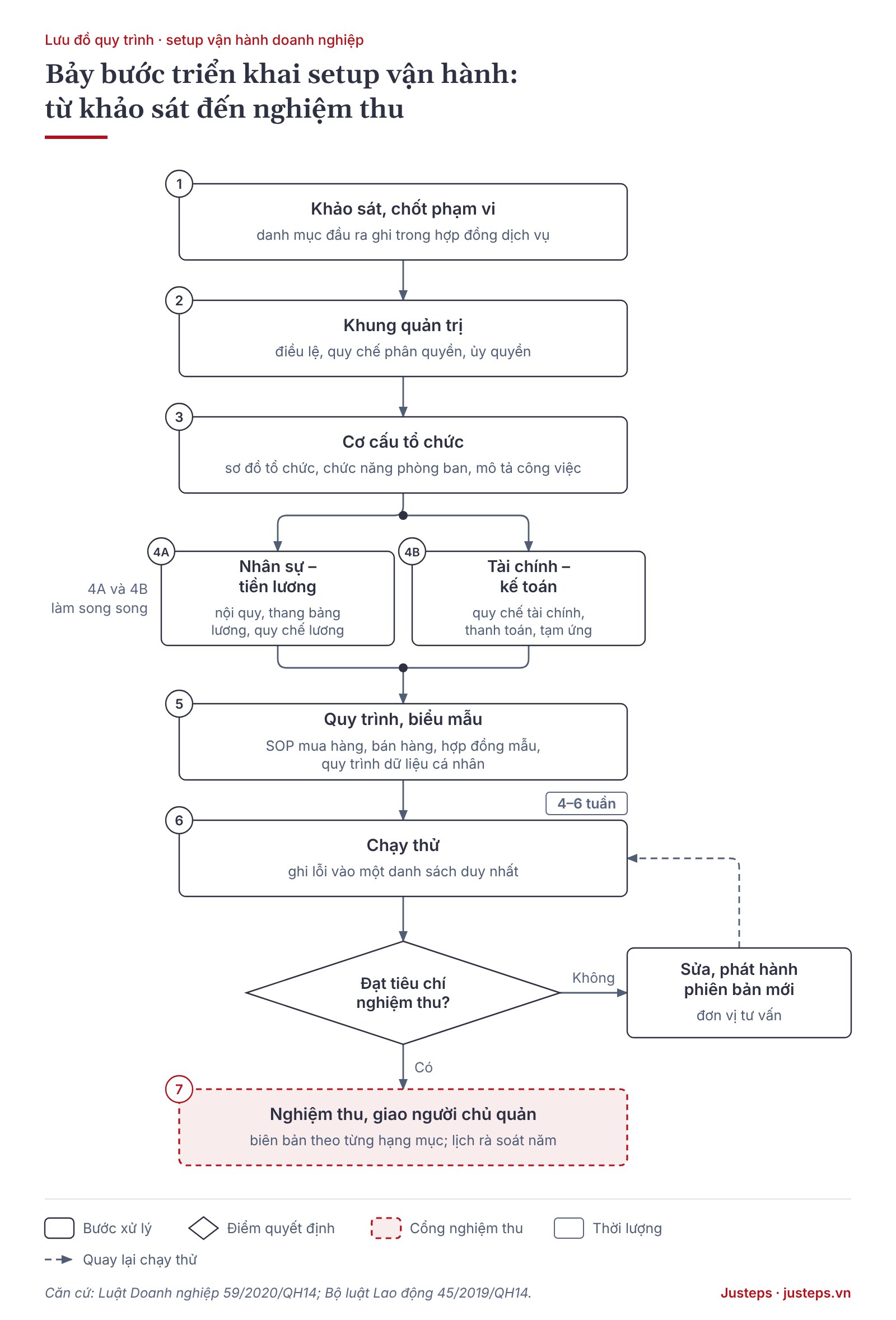
Figure 01. Flowchart of seven steps to set up business operations
Legal basis: Law on Enterprises 59/2020/QH14; Labour Code 45/2019/QH14
Steps run from top to bottom; steps 4A and 4B run in parallel. If the pilot run does not meet the criteria, the dashed branch loops back to the pilot; the red dashed box is the acceptance gate.
The governance framework must comply with the Law on Enterprises No. 59/2020/QH14 (as amended by Law No. 76/2025/QH15)[1] and the company charter, especially regarding the authority of the owner, Members' Council or Board of Directors over large contracts. HR and finance can run in parallel because both rely on the agreed organisation structure. Procedures and forms come last because they put the above regulations into practice.
Duration and resources
Duration depends on size and on how much usable material already exists. For a business with 50–100 staff, a project typically takes 12–16 weeks, with the pilot phase taking the most time.
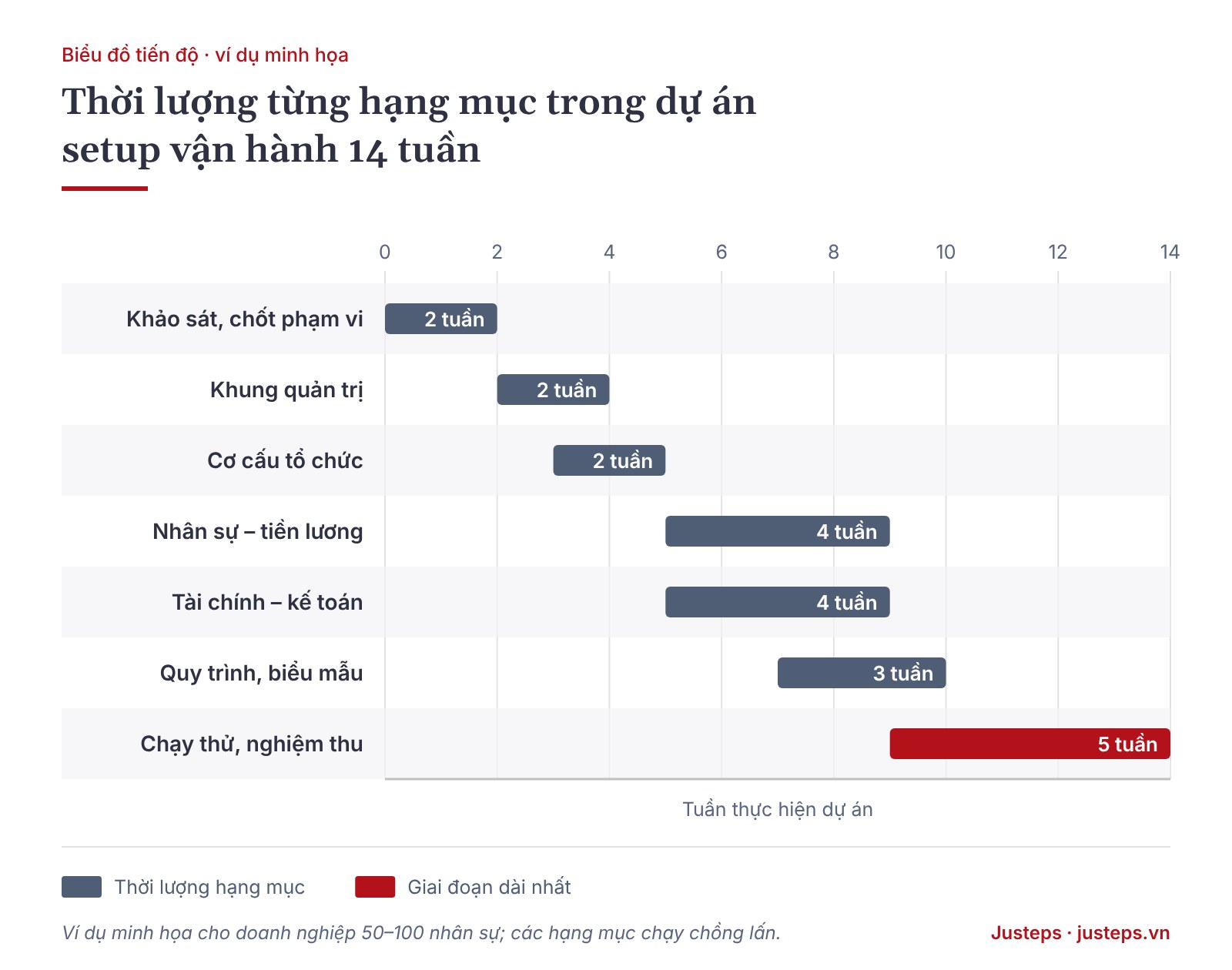
Figure 02. Duration of each workstream in a 14-week operations set-up project
Illustrative example for a business with 50–100 staff
Each bar shows the start and end week of a workstream; overlapping bars run in parallel. The red bar is the pilot and acceptance phase, the longest.
The business should appoint a project lead with decision-making authority, usually a deputy director or head of admin and HR, and each department head should set aside about 2–4 hours a week for input. The lack of a project lead is the main reason projects take twice as long.
Mandatory legal points to build in
Operations setup is not only an internal management matter; many deliverables must meet legal requirements. An employer with 10 or more employees must have written internal labour rules (under Article 118 of the Labor Code No. 45/2019/QH14)[2] and register them with the provincial labour authority (under Article 119 of the Labor Code No. 45/2019/QH14)[2]. The salary scale, pay table and labour norms are developed by the employer, consulting the employee representative organisation if any, and must be publicly announced at the workplace (under Article 93 of the Labor Code No. 45/2019/QH14)[2]. From 1 January 2027 the regional minimum wage rises to VND 5,700,000 per month in Region I under Decree No. 399/2026/ND-CP, so new salary scales should be built on this level.
On finance, the regulation must match the accounting regime applied under the Law on Accounting No. 88/2015/QH13. On data, every procedure collecting personal information of staff or customers needs a consent mechanism and protective measures under the Personal Data Protection Law No. 91/2025/QH15. For data generally, failing to issue a collection procedure or apply data protection measures may result in a fine of VND 20–40 million for individuals, with organisations fined double (under Clause 1, Article 8 of Decree No. 363/2026/ND-CP)[6].
Acceptance criteria, measured by what works
Accepting by page count is the easiest and the least useful approach. Each workstream should have criteria that can be tested in practice, a named person who accepts it and a signed record.
| Workstream | Deliverables | Acceptance criteria | Accepted by |
|---|---|---|---|
| Governance framework | Reviewed charter, authority regulation, powers of attorney | Every transaction type has a clear approver and limit | Owner, Board/Members' Council |
| Organisation structure | Org chart, department functions, job descriptions | No duplicated or unassigned tasks between departments | Director |
| HR and payroll | Template contracts, internal labour rules, salary scale, pay and bonus regulation | Labour rules registered (if 10+ employees), pay not below regional minimum wage | Director, HR head |
| Finance and accounting | Financial regulation, payment and advance procedures | A test payment passes every step with full documents | Chief accountant |
| Processes and templates | Purchasing and sales SOPs, template contracts, personal data procedure | A new hire follows the process after one briefing | Department heads |
The 4–6 week pilot is where most issues surface: approval limits set too low so the director still signs everything, forms missing fields accounting needs, a purchasing procedure that skips invoice matching. The project lead logs issues in a single list, the consultant fixes them and issues a new version before formal acceptance.
After acceptance, who maintains the system
The document set needs an owner (usually admin or legal), version numbers, effective dates and a review schedule at least once a year or whenever the law changes. For example, when the Labor Code is amended to add 2 public holidays from 1 March 2027, internal labour rules and holiday pay rules must be updated. Without an owner, within 12 months the system drifts back to "ask the director".
Legal basis and sources
- Law on Enterprises No. 59/2020/QH14, as amended by Law No. 76/2025/QH15 (effective from 1 July 2025).
- Labor Code No. 45/2019/QH14 and Decree No. 145/2020/ND-CP detailing working conditions and labour relations.
- Decree No. 399/2026/ND-CP on minimum wages for employees, applicable from 1 January 2027.
- Law on Accounting No. 88/2015/QH13.
- Personal Data Protection Law No. 91/2025/QH15, effective from 1 January 2026.
- Decree No. 363/2026/ND-CP on administrative sanctions in the data sector, effective from 11 November 2026.
How Justeps supports businesses
- End-to-end Operations setup: diagnosis, design, pilot and acceptance against criteria.
- Developing authority regulations, internal regulations and organisation structures through Governance standardisation.
- Drafting internal labour rules, salary scales and financial regulations in line with new rules via Advisory and compliance.
- Training department heads to run the procedures through our In-house training programme.
Contact Justeps for advice on your specific case.
Frequently asked questions
Should a newly established company commission a full operations setup right away?
Businesses with fewer than 10 people usually only need a minimum set: authority rules, employment contracts, a payment procedure and template contracts. The full package suits companies of around 30 people or more, or those preparing to open branches.
Can we do it ourselves using templates?
Yes, but templates rarely match actual authority and structure. If you do it yourselves, still follow the order from governance framework down to procedures.
When do internal labour rules take effect?
They must be registered with the provincial labour authority when the employer has 10 or more employees; effectiveness follows the Labor Code once the registration file has been received.
How often should the system be reviewed?
At least once a year, and immediately after major changes: new laws, headcount growth, new branches or a change of ownership.
Related articles
- Monthly labour and payroll compliance checklist for HR departments in Vietnam
- Trademark registration and management in Vietnam: clearance, filing, renewal and enforcement
- Exclusive distribution agreements in Vietnam: sales targets, territory, termination and end-of-term inventory
This article is for reference and reflects the regulations in force at the time of publication. Please consult Justeps for advice tailored to your company’s records and situation.
For further information, please contact:
📩 Email: info@justeps.vn
🌐 Website: https://justepslegal.com · https://justeps.vn
🌐 Page: Justeps
☎️ Hotline (Zalo): 096 172 2607
📍 Thanh Xuan Office: 12th Floor, Licogi 13 Tower, 164 Khuat Duy Tien Street, Thanh Xuan Ward, Hanoi, Vietnam
📍 Ha Dong Office: LK06B, No.10, Dong Dua Area, Ha Dong Ward, Hanoi, Vietnam
📍 Ho Chi Minh City Branch: 528 Le Van Sy, Ho Chi Minh City, Vietnam
📍 Hai Phong Office: Truong Thinh Village, Ha Dong Commune, Hai Phong, Vietnam
📍 Quang Ninh Office: Van Don Special Zone, Quang Ninh Province, Vietnam